To provide the best experiences, we use technologies like cookies to store and/or access device information. Consenting to these technologies will allow us to process data such as browsing behavior or unique IDs on this site. Not consenting or withdrawing consent, may adversely affect certain features and functions.
The technical storage or access is strictly necessary for the legitimate purpose of enabling the use of a specific service explicitly requested by the subscriber or user, or for the sole purpose of carrying out the transmission of a communication over an electronic communications network.
The technical storage or access is necessary for the legitimate purpose of storing preferences that are not requested by the subscriber or user.
The technical storage or access that is used exclusively for statistical purposes.
The technical storage or access that is used exclusively for anonymous statistical purposes. Without a subpoena, voluntary compliance on the part of your Internet Service Provider, or additional records from a third party, information stored or retrieved for this purpose alone cannot usually be used to identify you.
The technical storage or access is required to create user profiles to send advertising, or to track the user on a website or across several websites for similar marketing purposes.


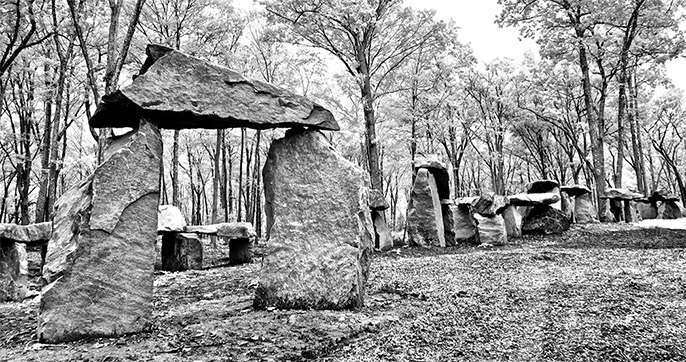
Landscape sculpture installation art is obviously best seen in person in real spaceland–an experience limited to those who show up.
The dynamic range of human eyes exceeds that of video and still photography. Those eyes see in three-space, those eyes can walk around, those eyes reside in the same 3D+time space of the artwork.
However, video and still photography provide different experiences of artwork.
Time-lapse video (as in all 3 segments of ZZ Smile) provide a new experience of the artwork by compressing hours of slow and subtle color changes into an intense and perceptive few minutes. And still photographs, particularly from diverse viewpoints, provide high-resolution contemplative detail. (I always photograph the pre-construction models for larger pieces to see the pieces better.) Stills also decontextualize artworks.
Part of project 5 (my new book/film/whatever) is to show how a pluralism of methods reveals different aspects of real-land objects. The general philosophy is “To see, do whatever it takes.” Various methods for obtaining visual experiences are not competitors, or necessarily to be judged as better or worse–but rather as colleagues in providing diverse visual readings of real-world objects and events.
I also think of my artworks as image generators that provide a multiplicity of visual experiences under varying light, observer positions, contexts. Thus my remark at the end of the video about the resemblance of ZZ Smile images to beautiful pencil outline drawing filled in soft and subtle water-color tones.
The paradox of Project 5 (and the universal problem of representation) is that it must describe real-land seeing experiences using the flatlands of movies, paper, computer screens–except for those who show up at the artworks.
I first saw a photo of Zerlina’s Smile at the end of the seminar in Seattle. My first impression was of water droplets hanging from a blade of grass. These additional photos convince me that this way of seeing the sculpture is likely reinforced by the play of color and reflections on the piece as the lighting changes throughout the day. Lovely. Probably my favorite piece next to Spring Arcs.