Residing in spaceland: Johnny Chung Lee's imaginative work
iPhone interface design
 |
 |
 |
 |
 |
Georgia O'Keeffe and Escaping Flatland
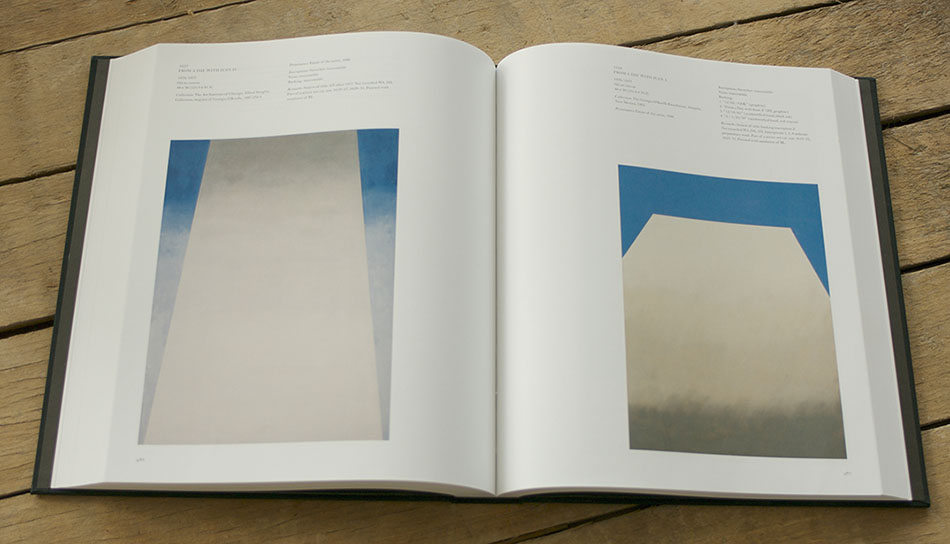
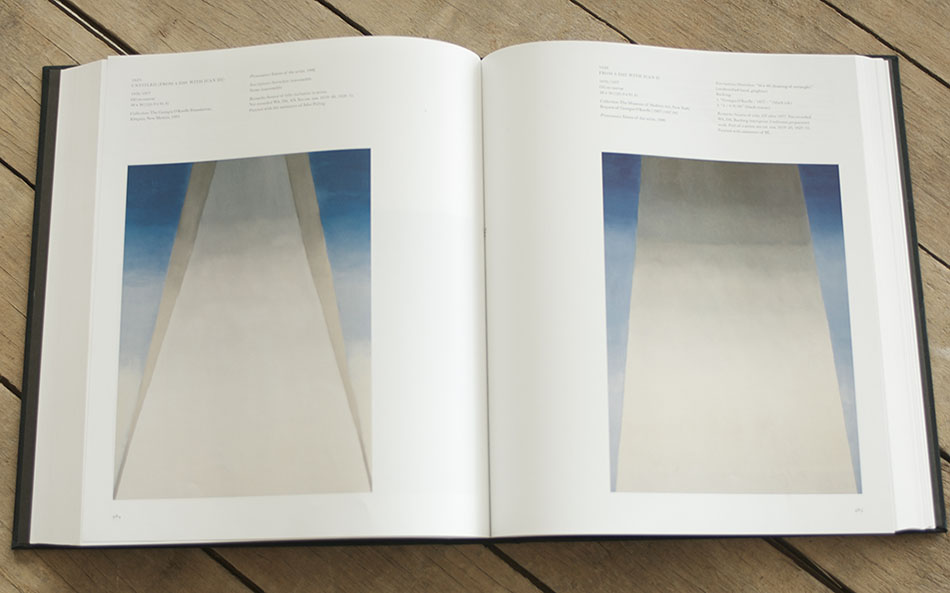
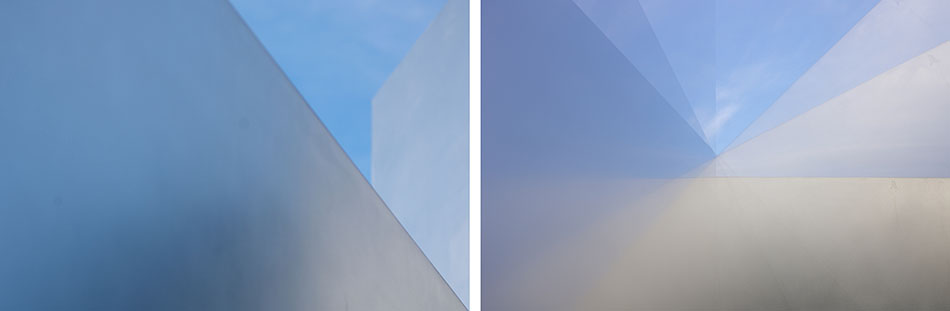
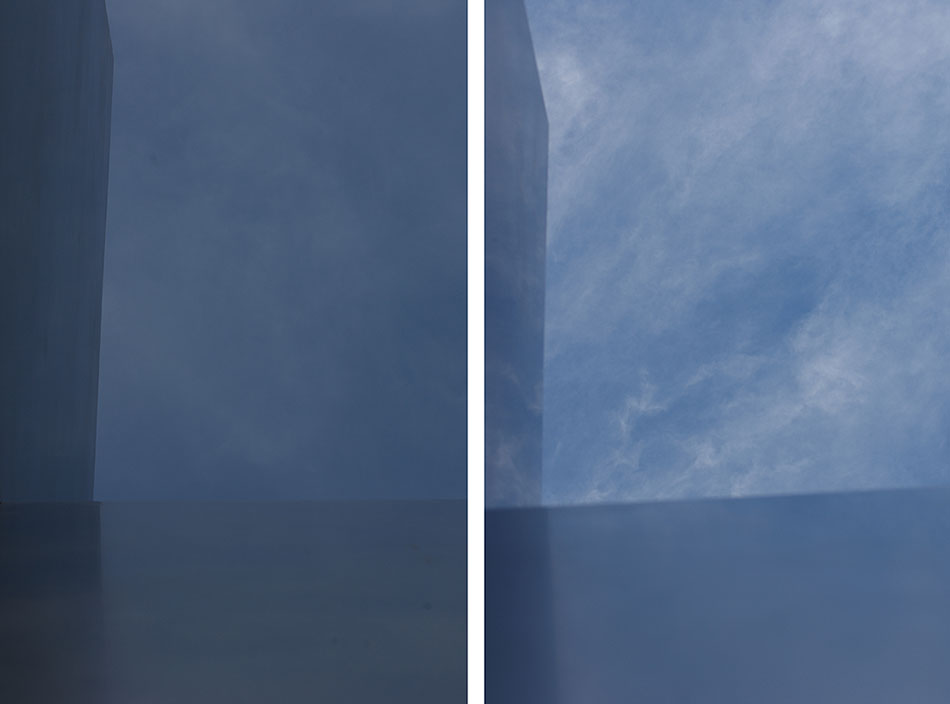
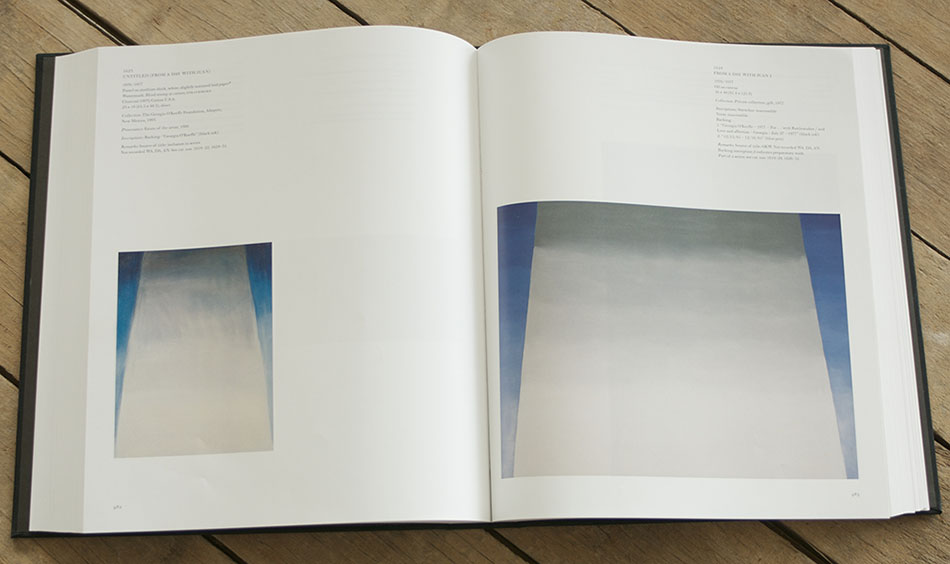 Below, photographs by Andrei Severny of my stainless steel artworks, the series Escaping Flatland.
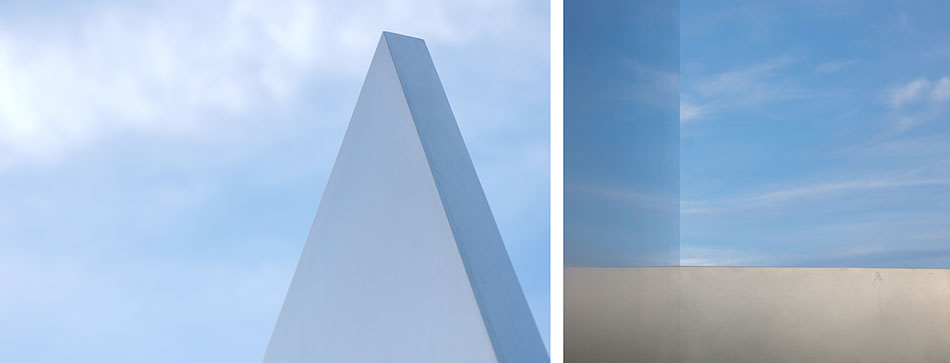
 Immediately below, color graduations in an O'Keeffe painting, followed by studies of color graduations in photographs of Escaping Flatland:


Maintaining at least some privacy on the internet
A useful way to monitor access attempts to your computer is Little Snitch 2. LS2 is described by its developer as follows:
"As soon as you're connected to the Internet, applications can potentially send whatever information they want to wherever they want.
Sometimes they do this for good reason, on your explicit request. But often they don't. Little Snitch allows you to intercept these unwanted connection attempts, and lets you decide how to proceed.
Little Snitch informs you whenever a program attempts to establish an outgoing Internet connection. You can then choose to allow or deny this connection, or define a rule how to handle similar, future connection attempts. This reliably prevents private data from being sent out without your knowledge. Little Snitch runs inconspicuously in the background and it can also detect network related activity of viruses, trojans and other malware."
Here's a recent report that indicates Adobe CS3 InDesign calls home to a web monitoring/marketing agency when the user opens InDesign. The IP number given by Little Snitch, upon an IP search, identified the agency as Omniture. Is Adobe a client of Omniture or Ominture a client of Adobe?
ZZ Smile (Zerlina's Smile)
Rocket Science
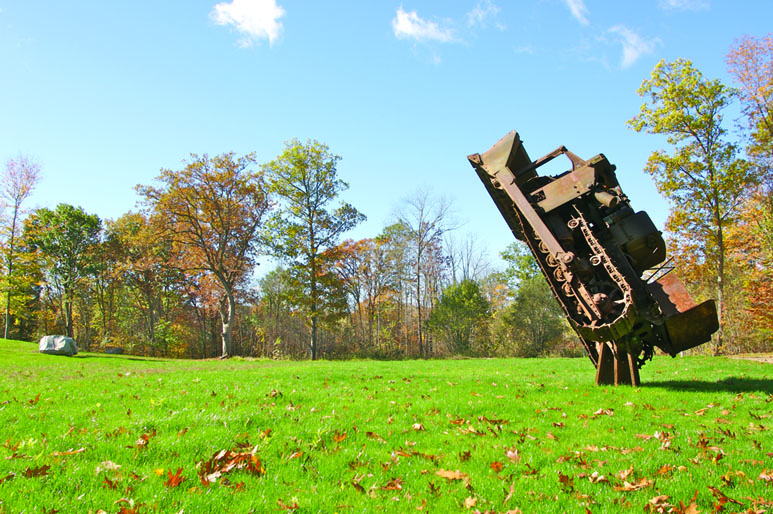
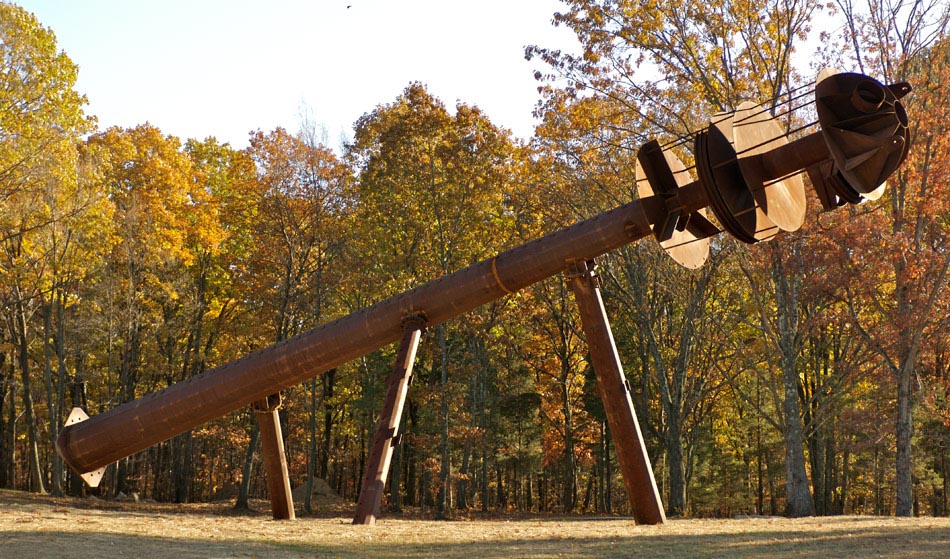
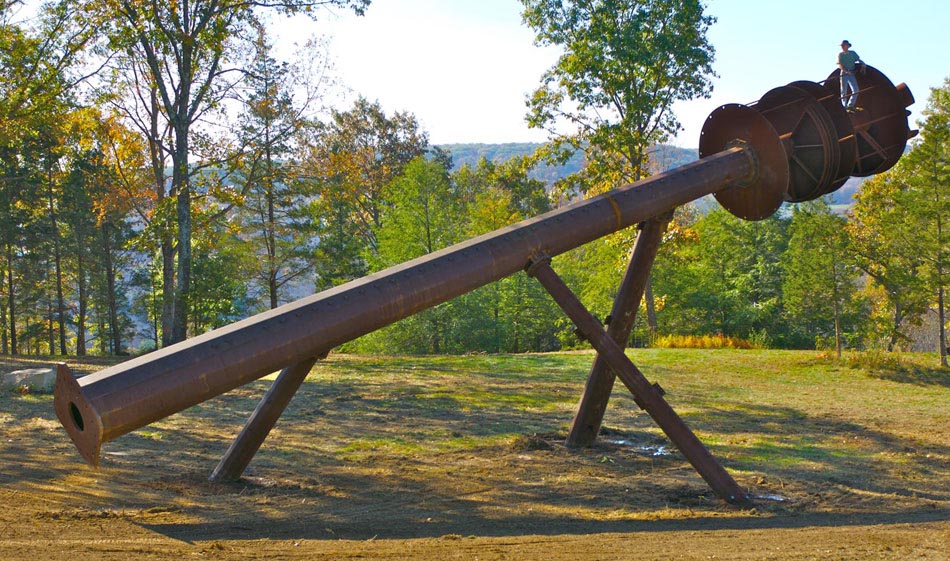 Rocket Science is ~32 feet (10 meters) high and ~72 feet (22 meters) long, and is constructed from ~48,000 pounds (22,000 kilograms) of rusting scrap steel. The picture above shows, for scaling purposes, the artist (6 feet, 1.8 meters tall) standing inside the spaceship at upper right.
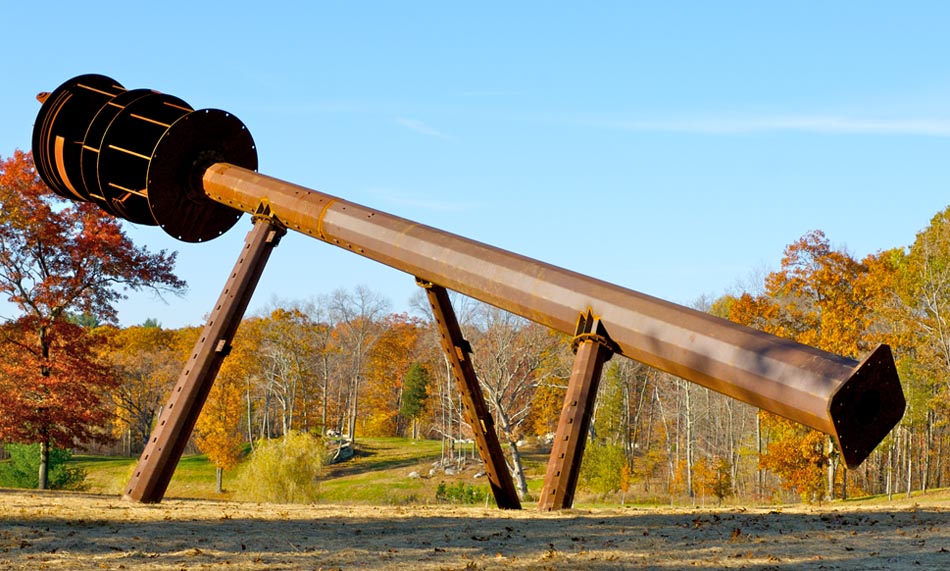
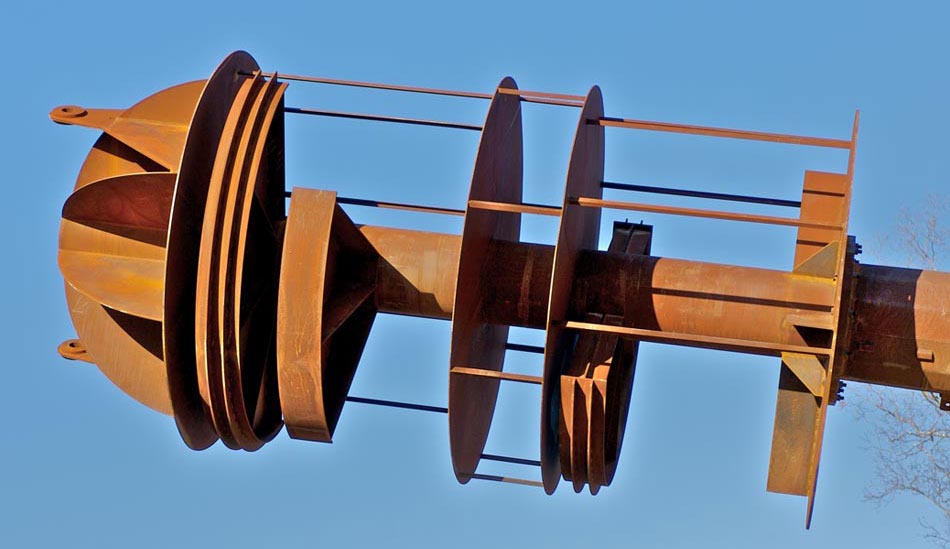 Below: Mike Nitowski, the welder from United Concrete who worked on Rocket Science, crawled 72 feet (22 meters) up the hollow tube in the fuselage and spacecraft emerging to see the fine view. The picture resembles a 1930s Soviet workers-paradise poster:
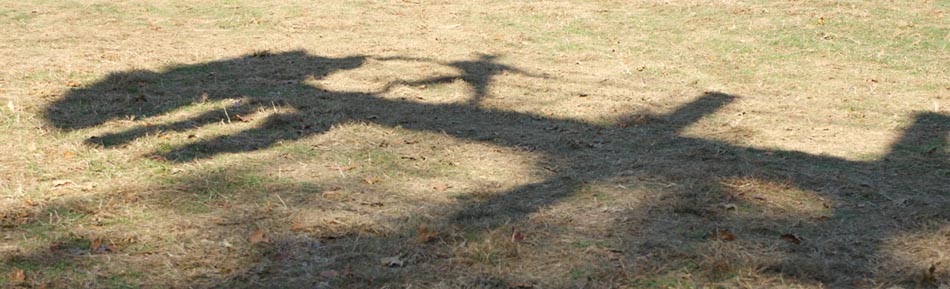
 Rocket Science casts amazing shadows down on the rolling land, shadows that flow across the land and move up the sloping hillside as the Earth rotates and the sun sets. Here are shadow pictures taken from my spacecraft perch looking down to the ground.
Note the distortions in the shadow shapes. In creating the piece, I expected some good shadows to show up, but these exceeded my expectations. The distortion of the human form is an especially happy result.
The shadows formed by the 3 legs should be interesting but shadows cast by nearby trees masked the leg shadows during this photo shoot. Eventually we'll make a time-lapse video of one full day of shadow-flows (as Andrei Severny and I did for Larkin's Twig here).
Rocket Science casts amazing shadows down on the rolling land, shadows that flow across the land and move up the sloping hillside as the Earth rotates and the sun sets. Here are shadow pictures taken from my spacecraft perch looking down to the ground.
Note the distortions in the shadow shapes. In creating the piece, I expected some good shadows to show up, but these exceeded my expectations. The distortion of the human form is an especially happy result.
The shadows formed by the 3 legs should be interesting but shadows cast by nearby trees masked the leg shadows during this photo shoot. Eventually we'll make a time-lapse video of one full day of shadow-flows (as Andrei Severny and I did for Larkin's Twig here).

 Following an afternoon atop Rocket Science, I called for a rescue mission. Conducted by Commander Andy Conklin, the mission arrived smoothly in due course. As seen in the shadows below, Andy climbs aboard the spacecraft from the rescue vehicle:
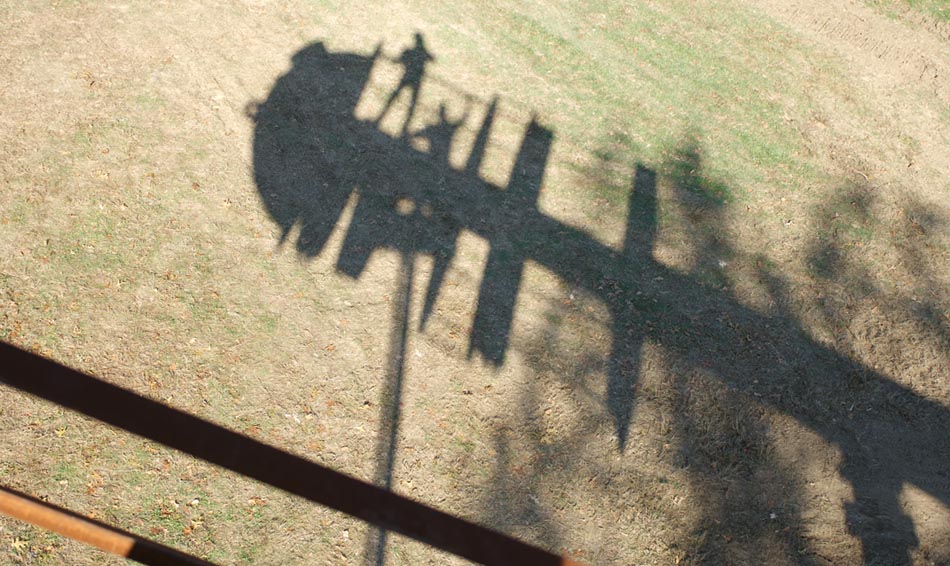 After rescuing the camera guy, Andy conducts our long voyage (32 feet or 10 meters) back to Earth.
One reason that outer space activities produce intriguing images (other than their intrinsic content) is the complex and unfamiliar points of view that naturally occur in front of the cameras of astronauts and cosmonauts. Here we see the spacecraft, its shadow, and also the shadow of the rescue platform. This flatland image becomes coherent when we realize that the rescue platform, where the photograph was shot, is in front of the rusting steel spacecraft; thus the camera is looking down into the spacecraft and further down onto the shadowed ground below (with the sun in back of the camera shining onto the artwork).
After rescuing the camera guy, Andy conducts our long voyage (32 feet or 10 meters) back to Earth.
One reason that outer space activities produce intriguing images (other than their intrinsic content) is the complex and unfamiliar points of view that naturally occur in front of the cameras of astronauts and cosmonauts. Here we see the spacecraft, its shadow, and also the shadow of the rescue platform. This flatland image becomes coherent when we realize that the rescue platform, where the photograph was shot, is in front of the rusting steel spacecraft; thus the camera is looking down into the spacecraft and further down onto the shadowed ground below (with the sun in back of the camera shining onto the artwork).
 Theory of Rocket Science
Rocket Science surprises, generates stories, presents self-contained paradoxes, is self-contrary.
On Rocket Science paradoxes and internal contradictions:
RS is massive, assertive, made from grossly industrial materials;
BUT
RS is toylike, funny, surprising, installed at a modest low point in a small valley that makes RS's massive size tiny compared to the surrounding landscape, treescape, viewscape.
RS is toylike
BUT
RS does not appear to be an uncontextual enlargement from a small model, but rather it appears as a piece and place in scale. RS was created at actual size from the scrap metal that went into the piece. Then, again at full scale, RS was revised during construction and installation. A small model was used late in the process to adjust the angles of the legs and to provide a guide for the engineering of assembly and welding.
RS has a strong symmetry about the fuselage and spacecraft axis:
BUT
the RS legs are strongly askew.
The RS symmetry about a central axis combined with the crew headquarters in a capsule at the top is likely the best design for space vehicles (Apollo, and the new post-Shuttle generation of space vehicles carrying humans--Constellation, Ares, Orion). Such symmetry is contrary to the design of the current Shuttle (with its pretend airplane) that has contributed to its chronic difficulties. Better also to place the crew at the top end of the rocket, in front of the launch debris-shower in an unromantic capsule (no landings by astronaut commanders) as is the case for Apollo and the forthcoming Orion/Ares.
Thus,
RS has the symmetric architecture for the vehicles of the future
BUT
RS is crudely assembled, amateur rocket science.
Construction of Rocket Science
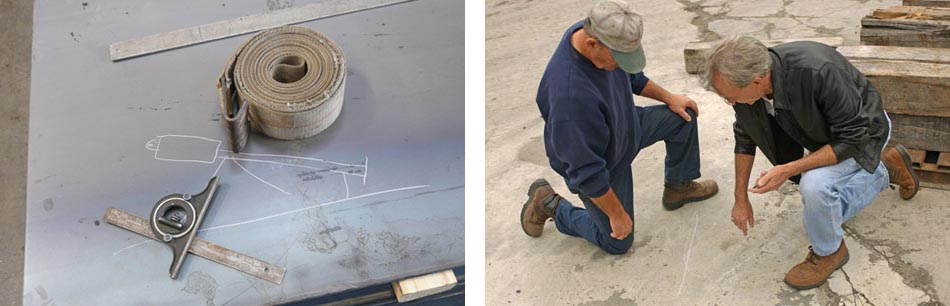
At United Concrete in Wallingford, Connecticut, a pre-launch high-level engineering meeting of Bruce Woronoff and ET. We used Advanced Design System Methodologies to plan Rocket Science, as can be seen in our working drawings below:
Theory of Rocket Science
Rocket Science surprises, generates stories, presents self-contained paradoxes, is self-contrary.
On Rocket Science paradoxes and internal contradictions:
RS is massive, assertive, made from grossly industrial materials;
BUT
RS is toylike, funny, surprising, installed at a modest low point in a small valley that makes RS's massive size tiny compared to the surrounding landscape, treescape, viewscape.
RS is toylike
BUT
RS does not appear to be an uncontextual enlargement from a small model, but rather it appears as a piece and place in scale. RS was created at actual size from the scrap metal that went into the piece. Then, again at full scale, RS was revised during construction and installation. A small model was used late in the process to adjust the angles of the legs and to provide a guide for the engineering of assembly and welding.
RS has a strong symmetry about the fuselage and spacecraft axis:
BUT
the RS legs are strongly askew.
The RS symmetry about a central axis combined with the crew headquarters in a capsule at the top is likely the best design for space vehicles (Apollo, and the new post-Shuttle generation of space vehicles carrying humans--Constellation, Ares, Orion). Such symmetry is contrary to the design of the current Shuttle (with its pretend airplane) that has contributed to its chronic difficulties. Better also to place the crew at the top end of the rocket, in front of the launch debris-shower in an unromantic capsule (no landings by astronaut commanders) as is the case for Apollo and the forthcoming Orion/Ares.
Thus,
RS has the symmetric architecture for the vehicles of the future
BUT
RS is crudely assembled, amateur rocket science.
Construction of Rocket Science
At United Concrete in Wallingford, Connecticut, a pre-launch high-level engineering meeting of Bruce Woronoff and ET. We used Advanced Design System Methodologies to plan Rocket Science, as can be seen in our working drawings below:

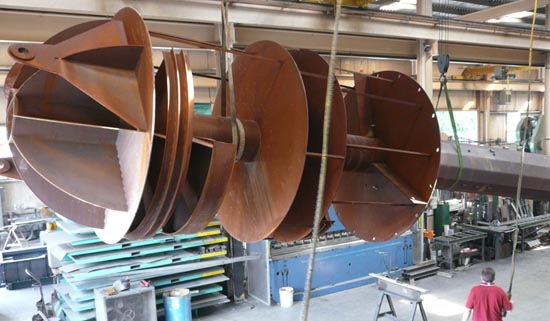
 Here is the first time Rocket Science got off the ground.
At the factory, the fuselage and spacecraft were connected by a temporary tack-weld for the lifting shown at right. I then concluded that the fuselage was stubby and needed to be longer by about the distance between the rear 2 circular plates at the back of the spacecraft (about 10 to 12 feet, 3 to 4 meters). The resulting fuselage seam can be seen on the built piece.
Here is the first time Rocket Science got off the ground.
At the factory, the fuselage and spacecraft were connected by a temporary tack-weld for the lifting shown at right. I then concluded that the fuselage was stubby and needed to be longer by about the distance between the rear 2 circular plates at the back of the spacecraft (about 10 to 12 feet, 3 to 4 meters). The resulting fuselage seam can be seen on the built piece.
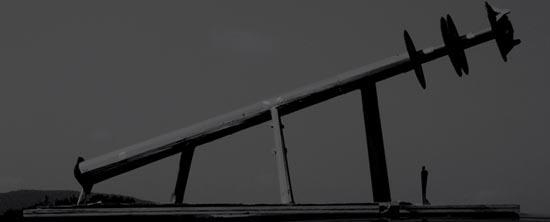
 Below, our model of Rocket Science. A little cardboard human provides a sense of scale. I looked at many photographs as well as the model itself. Some images are desaturated to calm down the surface texture on the model.
 Installation of Rocket Science
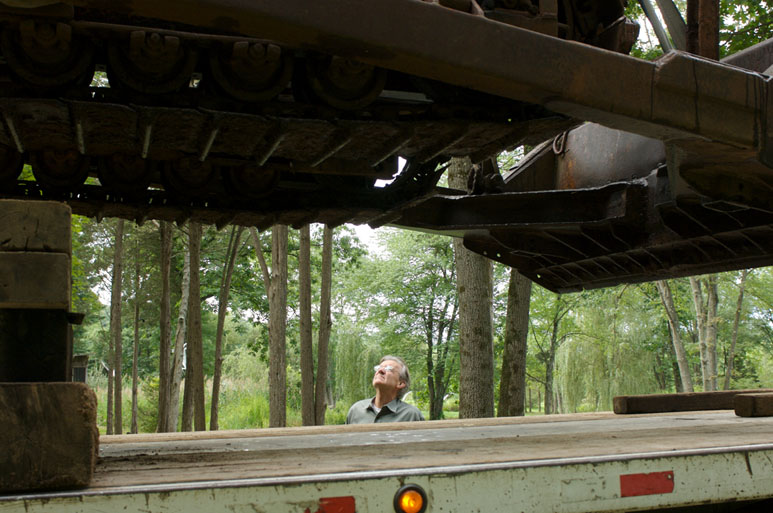
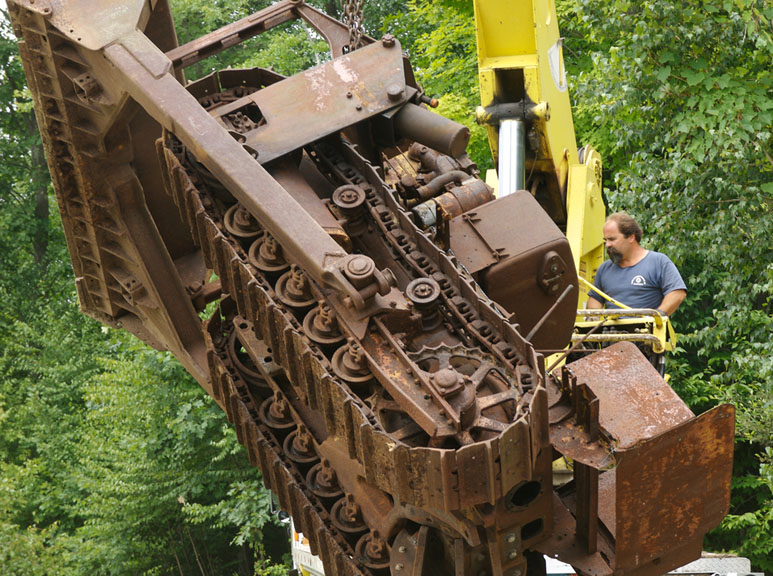
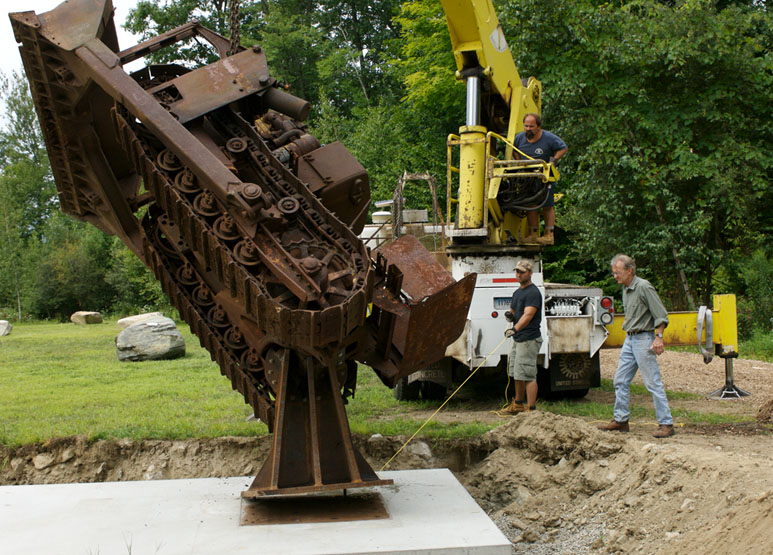
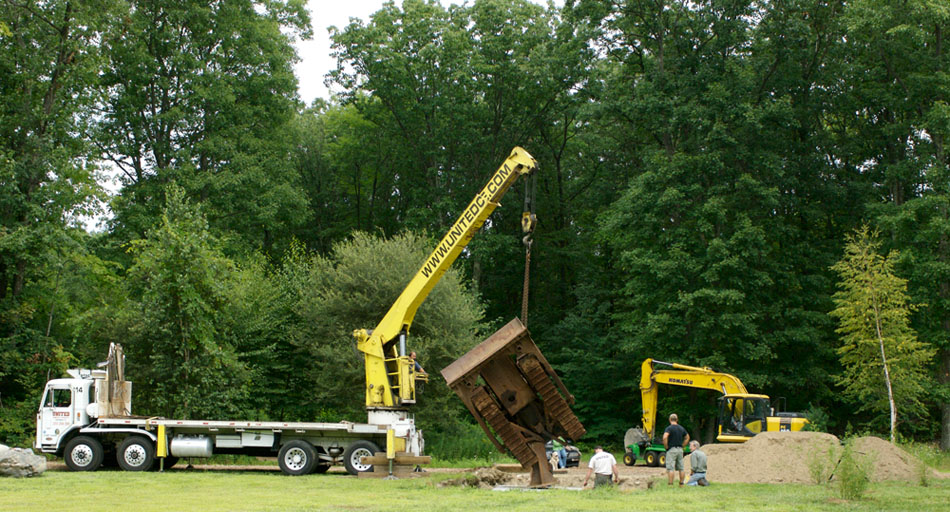
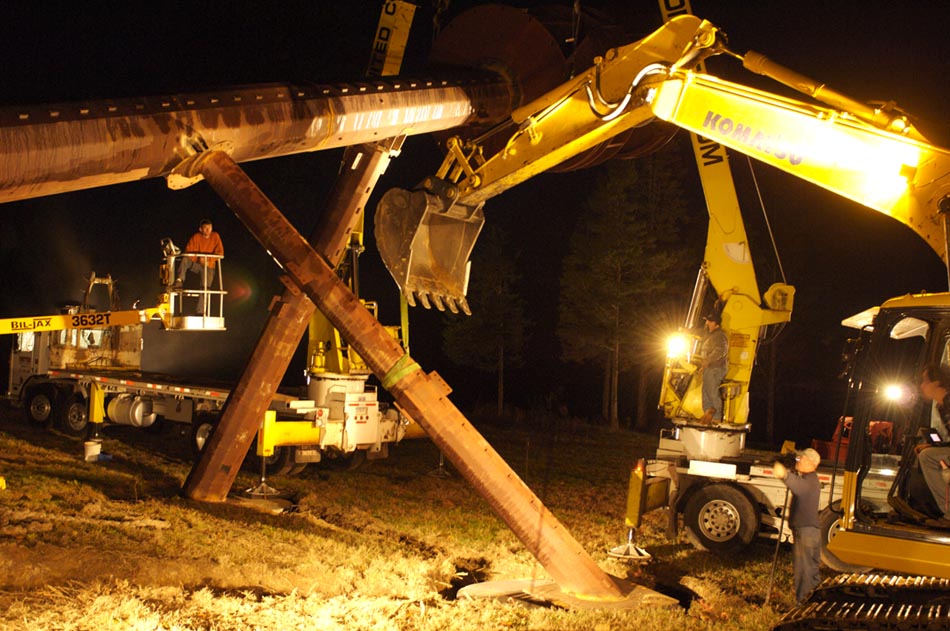
The United Concrete factory-built kit (some assembly required) for Rocket Science consisted of 8 items: fuselage, spacecraft, 3 legs, and 3 concrete mounting pads (each weighing 12,000 pounds or 5,400 kilograms).
The installation took all weekend, with work late Saturday night.
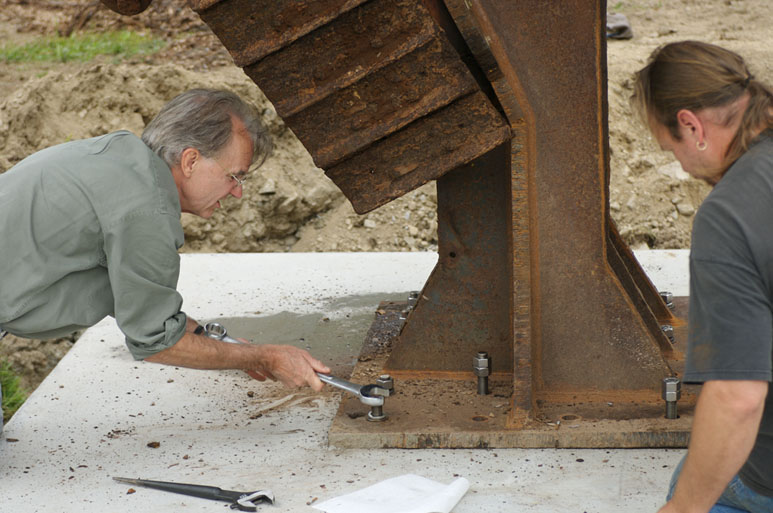
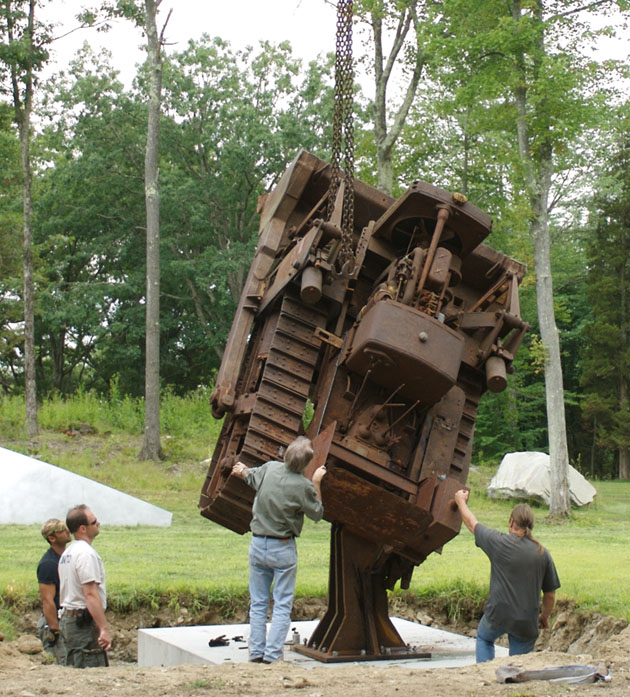
The main tasks were: (1) attaching the spacecraft to the fuselage, (2) attaching the 3 legs to the fuselage, (3) tying the leg baseplates to the concrete pads and tying the pads together by underground steel, (4) cleaning up the fields under and around Rocket Science.
Installation of Rocket Science
The United Concrete factory-built kit (some assembly required) for Rocket Science consisted of 8 items: fuselage, spacecraft, 3 legs, and 3 concrete mounting pads (each weighing 12,000 pounds or 5,400 kilograms).
The installation took all weekend, with work late Saturday night.
The main tasks were: (1) attaching the spacecraft to the fuselage, (2) attaching the 3 legs to the fuselage, (3) tying the leg baseplates to the concrete pads and tying the pads together by underground steel, (4) cleaning up the fields under and around Rocket Science.

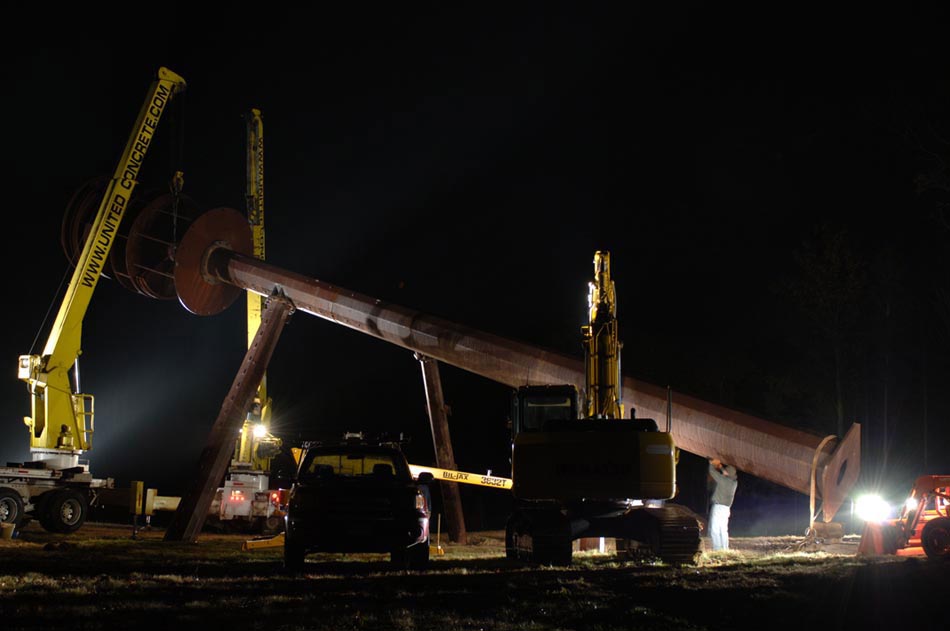 Here is our movie showing the 2-day installation:
This video is also available on YouTube and Vimeo
Photographs by Andy Conklin, Andrei Severny, Edward Tufte.
Here is our movie showing the 2-day installation:
This video is also available on YouTube and Vimeo
Photographs by Andy Conklin, Andrei Severny, Edward Tufte.Buddha with Bird Nest: sculpture

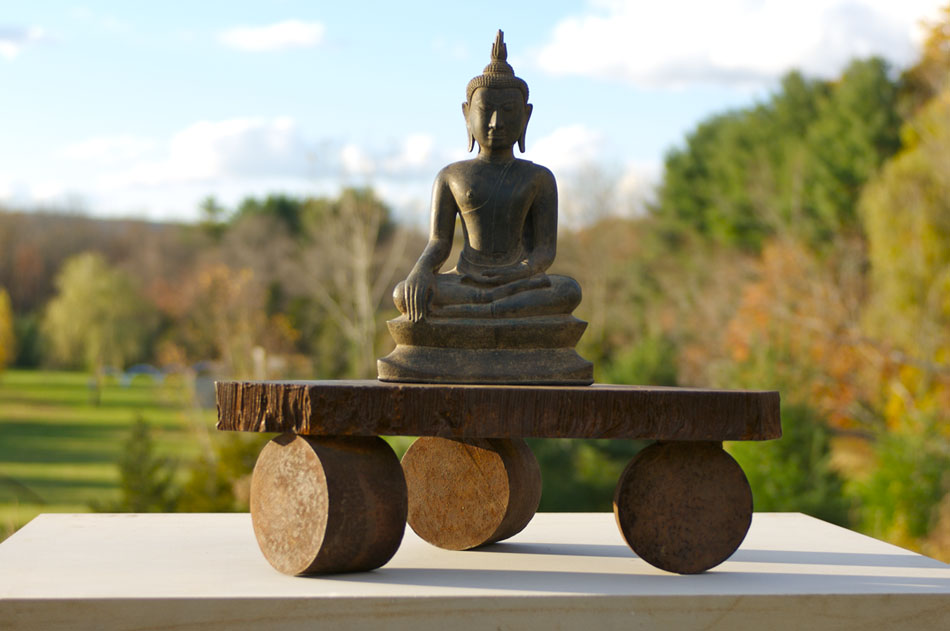 Buddha also appears in my Beautiful Evidence (at page 87) in the discussion of the Diamond Sutra:
 Photographs by Andrei Severny.
Major show of ET artwork at The Aldrich Contemporary Art Museum
Sheep visit landscape sculpture
Several months ago 32 sheep visited our sculpture field; here is a video showing sheep interaction with many of the pieces. Encouraging visitors to interact with the art--and even to touch the art works--is a current trend in museum installations. The interactions in this case include rubbing up against the artworks and eating the grass around the pieces.
This video is also available on YouTube and Vimeo