The Life of Charles Joseph Minard (1781-1870)
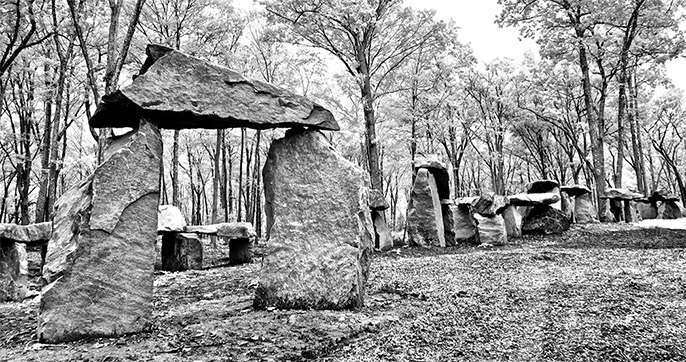
ET sculpture and print show in Los Angeles
Minard's data sources for Napoleon's march graphic
Complex Organizational Charts
Can you recommend software for preparing complex organizational charts that can be generated from a database of employee information? I need to develop about 30 pages of charts for a department of 1500 people that show:
1) organizational relationships
2) number of employees by job title category reporting to each manager, and the total for that manager
3) funding classification -- indicate for employees in each title category how many are funded as Operating, how many are Capital, and the total
4) summary info -- at the bottom of each page, subtotal the number of employees by occupational group and funding classification
I have used Excel for this in the past, but that cannot be the best solution. I need s/w that supports simple arithmetic funtions and numberical displays in addition to the typical organizational design. It would be ideal if the charts could be automatically generated from an employee database, with the data on the lower level charts automatically rolling up to the data on the higher level charts.
Pythagorean theorem in one word
In a recent course (New York, 30 July 2002) you mentioned a one-word proof of the Pythagorean theorem: "Behold!" Where can I find the picture that accompanies the word?
[And: Thank you for a wonderful day!]
Flatland
Thank you for a very enjoyable seminar in NYC.
As you discussed Flatland in the context of both the printed page and your sculpture, I was struck by the similarity of the attempt to help the mind escape the boundaries of the printed page via good design and the struggle of Edwin Abbot's "humble native of Flatland" to escape the literal boundaries of his two-dimensional world.
Is the comparison intentional?
Tornado Plots
Is anyone familiar with something called a tornado plot? Any recommendations on written sources about them?
Detailing on choropleth maps
In epidemiology and public health we often need to represent health problems using rates rather than individuals. Clearly when mapping rates (ill/population) we can't use spot maps (e.g. John Snow's cholera map)but need instead to resort to choropleth (area) maps. Examples cancer maps are in ET's first book. The problem with choropleth maps is that the shading would tend to obscure or obliterate any other geographic features. Accordingly, the value of the map as a layered instument for analysis, comparisons, relationships etc. is lost. It seems to me that it would be possible given a careful choice of colors or shadings to add additional layers to the map showing geographic (rivers, roads, high altitude) or environmental features that might be related to the disease distribution. However, I can find no examples (except for political boundaries or an ocasional superimposed spot) even in cartography texts. Do you know of any example choropleth maps showing other critical geographic features? -- any suggestions on shading or coloring?
Thanks,
Bob Fontaine
Atlas of North American Exploration
I wondered if Edward Tufte or any of the rest of you have seen the book The Atlas of North American Exploration by William Goetzmann and Glyndwr Williams. I think it does a very effective job of graphically and verbally presenting various historic explorations throughout North America. I especially love the 1854 hand-colored lithograph (pp 168 - 169) done for the Great Pacific Railroad survey. It is a sort of 3-D map showing a panoramic view of the Rocky Mountains, and terrain that a railroad could pass through.
Graphical map for exploring Apollo landing sites
.