For digital globe engineers, the holy grail remains a spherical computer screen. Edward R. Tufte, the author of "The Visual Display of Quantitative Information," is enthusiastic about the potential of digital globes to remind us of earth's offline realities -- "by forgetting about the 3D whole Earth, flatland economic optimizing leads to global pessimizing" -- as well as the possibility that a company like Apple will someday soon roll out a Retina-caliber spherical display.
An inquiring emailer asked about "pessimizing." My response:
Pessimal is a word my housemate (Ludwell Sibley) and I concocted around 1963 at Stanford; it is the opposite of optimal. It was my response to economisting (see my Beautiful Evidence on economisting) theories that claim some sort of optimal outcomes (usually in a narrow, theoretical sense). That, in turn, led to the mocking phrase "Pareto pessimal" to make fun at optimality claims, probably as a response to reading Buchanan and Tullock. Similar play to encourage a bit of skepticism about statistical estimation theory: instead of "Least Squares Estimators," "Most Squares Estimators."
It is also my story about how the Earth ends: that local optimizing (local maximization of local interests) eventually adds up, via a massive accumulation of externalities and unanticipated consequences, to global pessimizing. Global warming might work along those lines. Or when too many Dear Leaders go thermonuclear. Or perhaps some hints in the recent financial crash, as fiercely local optimizers aggregated to a big screw-up.
More grandly: locally competitive evolution and locally competitive markets, which, while producing locally optimal outcomes (at least in our theory-dreams), lead to globally lousy results. Seeds of their own destruction and so on. This is also an answer to the Fermi Paradox "Where are they?", where they = extraterrestrial intelligence. Thus the Search for Extraterrestrial Intelligence (SETI) has been unsuccessful because ETI's have blown themselves up before they were able to spread, conquer, or communicate successfully with other intelligence beings. So it goes.
These thoughts partly grow from maybe the best paper ever in social science, the sociologist
Robert Merton's "The Unanticipated Consequences of Purposive Social Action" (by Robert Merton the father, not the economist son).
I was thrilled that pessimizing got into the Times, which now makes it officially a word, defined easily by being in parallel with optimizing. I sent the quote in an email to the reporter (probably after an interview) so as to get it exactly the way I wanted to say it, and the Times quoted it accurately.
Other words of mine: chartjunk, data-ink, data-ink-ratio, non-data-ink, sparkline, slopegraph, rugplots, ghostgrid (graph paper), economisting. At Princeton years ago, I taught a statistical graphics seminar with John Tukey, who made up his own very extensive private vocabulary (he coined the words bit and software) and was said to speak in Tukish.
Warning: Undefined variable $count in /nas/content/live/graphicspress/wp-content/themes/edwardtufte/archive.php on line 24
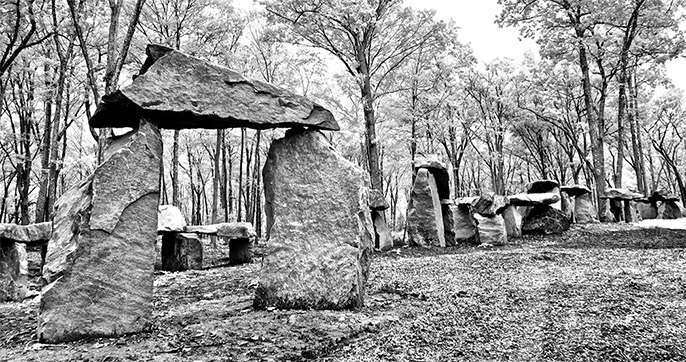
Megaliths, Continuous and Silent, Stuctures of Unknown Significance
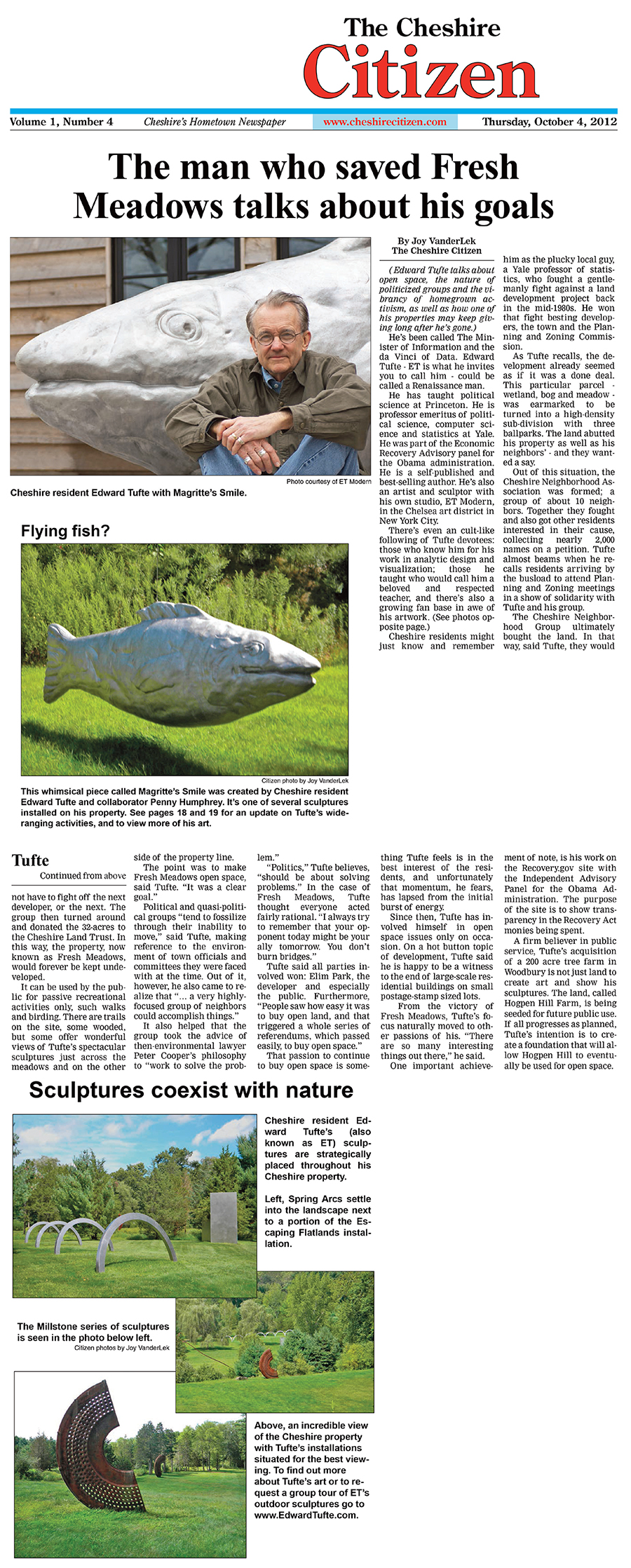
The images below show some of my stone+air artworks constructed recently from stones found at the sculpture fields at Hogpen Hill Farms in Woodbury, Connecticut. Not all artworks shown are finished, and most undergo a process of editing and revision lasting for several months after initial construction.
I think of the pieces as being made from two materials, stone and air. Much of thinking about the works is devoted to seeing and reasoning about the airspaces generated by positioning the stone. The work is
also installation art; the artist controls the artwork's location, shapes the surrounding land, creates platforms for views, and plants architectural evergreens nearby.
As the works are completed, I will try to write more about them. For now, here are some artworks that are, I hope, beyond words.
Megalith with 6 Elements, 2013, stone and air, 32 x 20 x height 15 feet or 10 x 6 x height 4.5 meters
Ace the dog, height 27 inches or 70 centimeters
Below, I-beam megalith, 2013, stone, steel, air, 23 x 11 x height 15 feet or 7.0 x 3.4 x height 4.6 meters
Ace the dog, height 27 inches or 70 centimeters
Below, Breaching Whales, 2012, stone and air, 17 x 12.5 x height 15 feet or 5 x 4 x height 4.5 meters
Showing the linked continuity of the rambling megaliths:
A prop piece, as a large stone is propped up by a smaller supporting stone.
In making a prop piece, the angle of intersection requires careful study.
Below, the yellow tool (a pick) is about 42" long (for scaling); the unusual image color-processing
helps place the trees in the background and accent the stone surfaces:
A continuous flowing piece designed as a whole around the 4 major airspaces in gaps between vertical supports:
The Walking Wall, with ramped access to the top surface.
I had the High Line in mind, as even this modest elevation here (about 34") results in a substantial shift of viewpoint. The supporting wall breaks away from traditional walling ("maximize volume of stone in a wall") by creating airspaces and see-throughs to make a lacy wall. So the wall is about 30% to 40% air. Air is a material.
Both the gate and the sphinx are about 18 feet or 5.5 meters in height:
We fractured these stones, resulting in cubist three-dimensionality.
Fracturing exposes fresh bright colors, planes, edges inside the original unbroken stone.
This piece continues on for about 40 feet or 12 meters, at varying heights up to 16 feet or 5 meters.
Two huge megaliths, 80 to 100 tons of stone total. I forget about raw mass/tonnage a few weeks after putting such artworks together, but during construction it is about overcoming gravity, de-massing, making the airspace and stonespace optically move, even float, without weight.
And about careful rigging practices and safety ("Never get under a live load." "Stones can bounce when they fall." "Keep your hands and body away from pinch points."). The piece in the background here also appears in the first two images beginning this report.
Below, I started working with Dan Snow in January 2012. We first did these lacy walls, with the upper part only one stone wide. Some old walls in Ireland are wonderfully lacy with see-throughs and good airspaces.
Dry walling (without concrete or filler) usually requires that each stone touch 4 others, which is usually the case in these two lacy walls.
The images below show the process for making these artworks.
Dan Snow, the amazing stone worker and waller, worked with me on many stone pieces.
Here I am happily cleaning up newly constructed megaliths.
The water etches out cracks in the stone and also reveals the complex surface texture of the stone.
These two images show my messing-around clay sandboxing (at 1/48 scale), photographs, and lots of sketches that help reason about the air and stone.
But the final architecture of the work is done at full scale with real stones. Complex air-spaces and stone-spaces are notoriously difficult to understand by means of flatland sketches/photographs and scale models. A much richer understanding is achieved during the actual construction and the follow-up revisions (which may take several months). Still, scale models, handwaving, and flatland sketching/photography contribute. Whatever it takes.
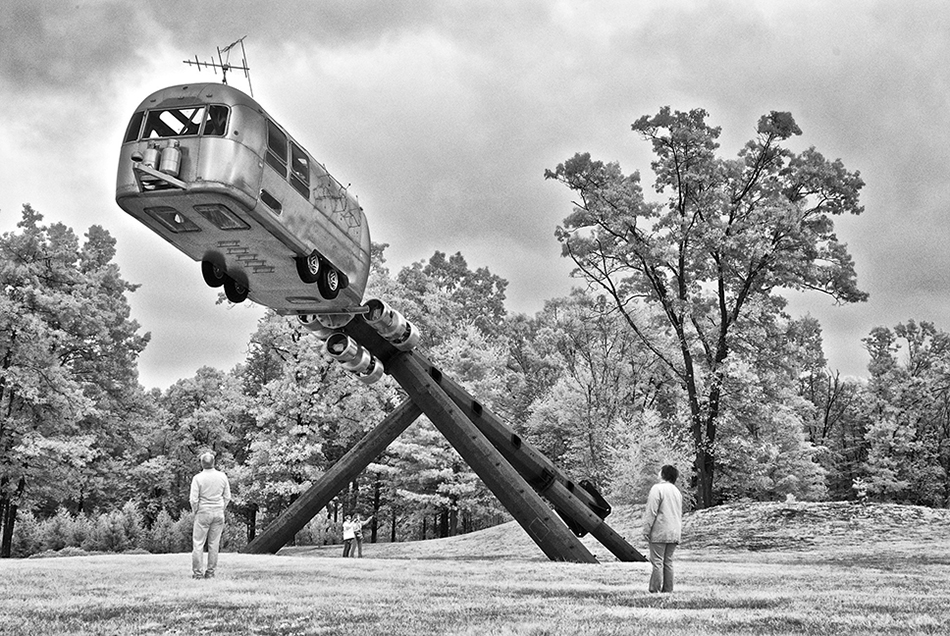
Rocket Science 3: Airstream Interplanetary Explorer
ET, Rocket Science 3, Airstream Interplanetary Explorer 2011-2012
steel, aluminum, stainless steel, electronics
length 84 feet or 26 meters, height 31 feet or 9 meters
Infrared image from IR-converted Nikon D200 by Fredrick K. Orkin:
Explanation of Feynman diagrams on sides of trailer (source of the 2 pages below: ET, All Possible Photons, ET Modern exhibition catalog 2012, 16 pages, download here):
Reflections of Feynman diagram on trailer:
Backup rolls of blue and white webbing for lawn-chair repairs on Mars.
Also note red Brembo brakes and yellow ceramic brakes, as well as wheel theft locks:
Infrared image from IR-converted Nikon D200 by Fredrick K. Orkin:
Note rotating antenna:
Warning: Trying to access array offset on value of type bool in /nas/content/live/graphicspress/wp-content/themes/edwardtufte/archive.php on line 21
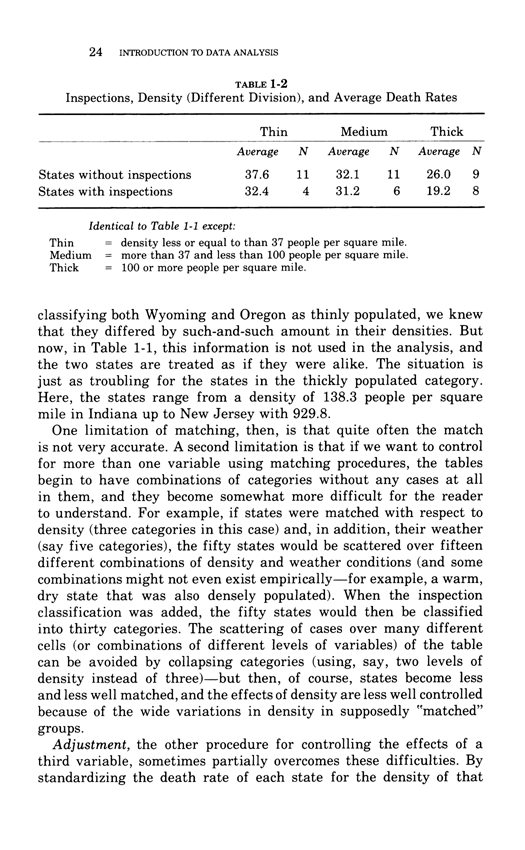
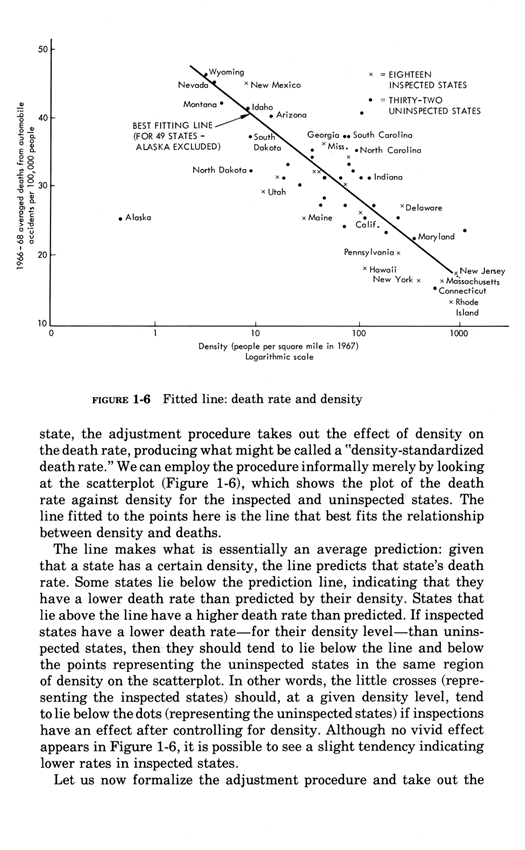
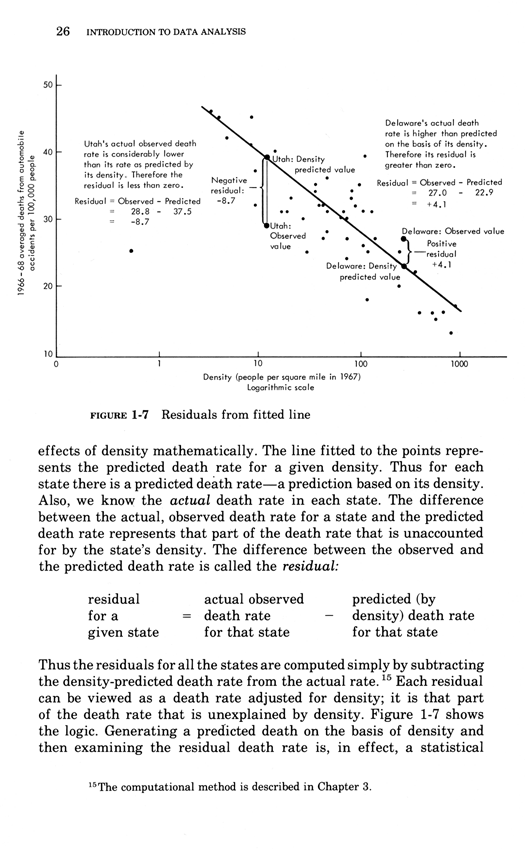
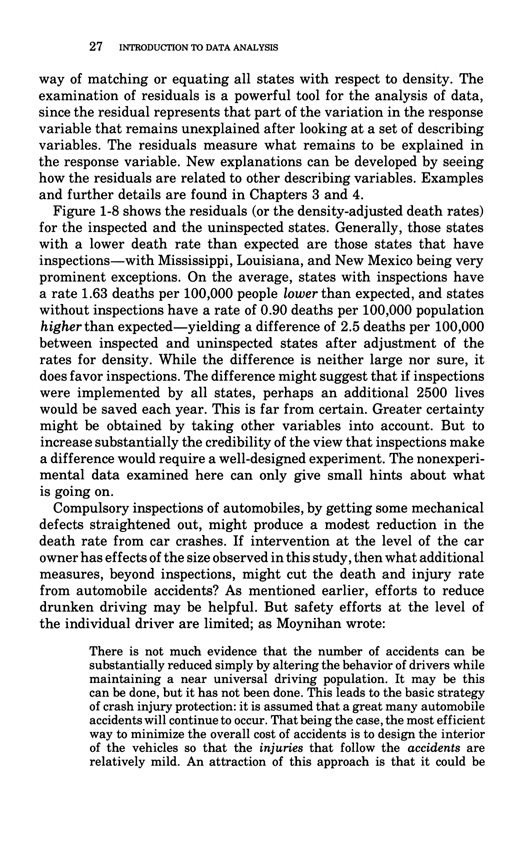
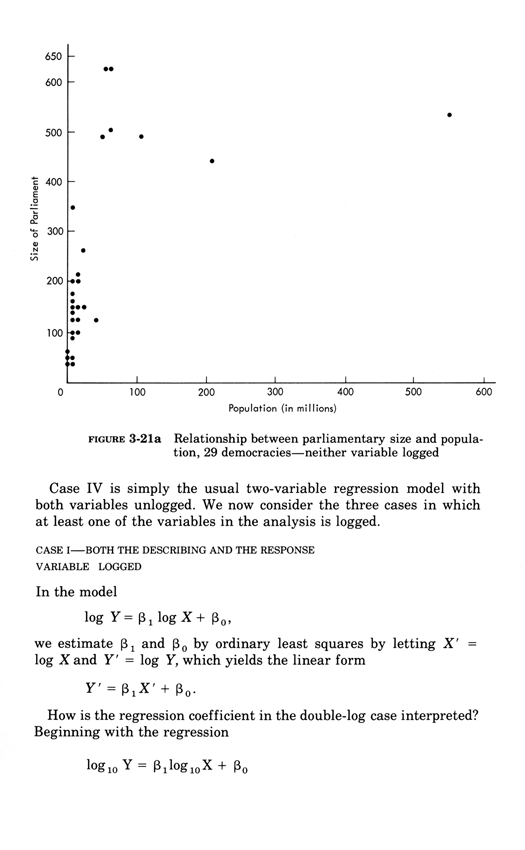
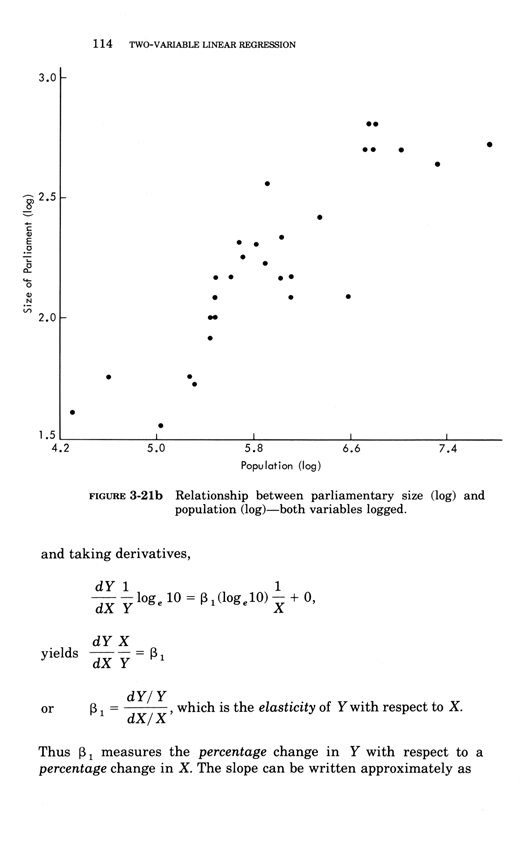
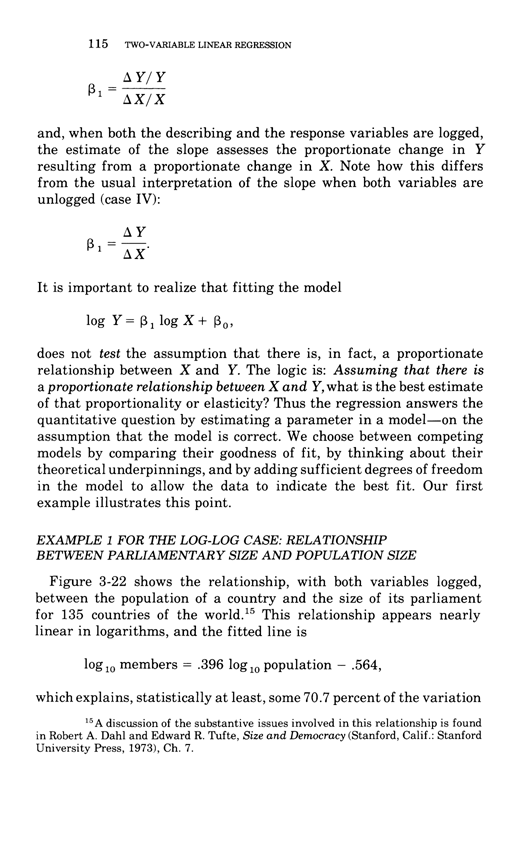
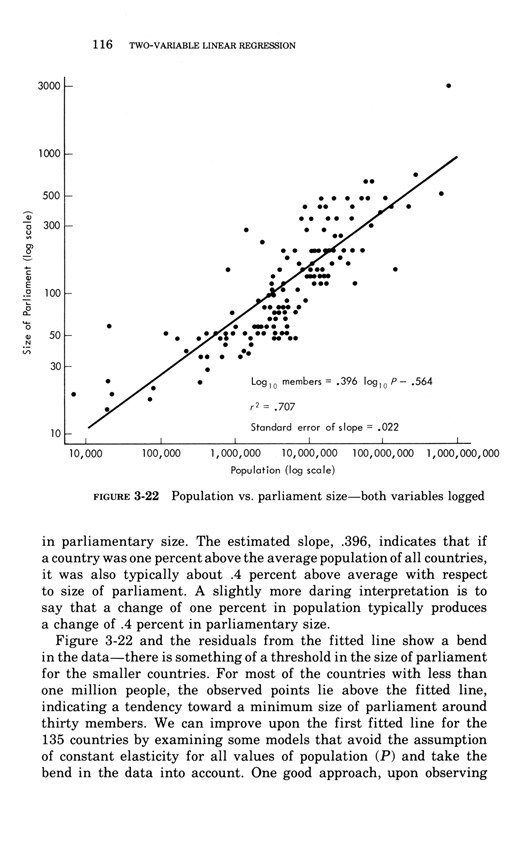
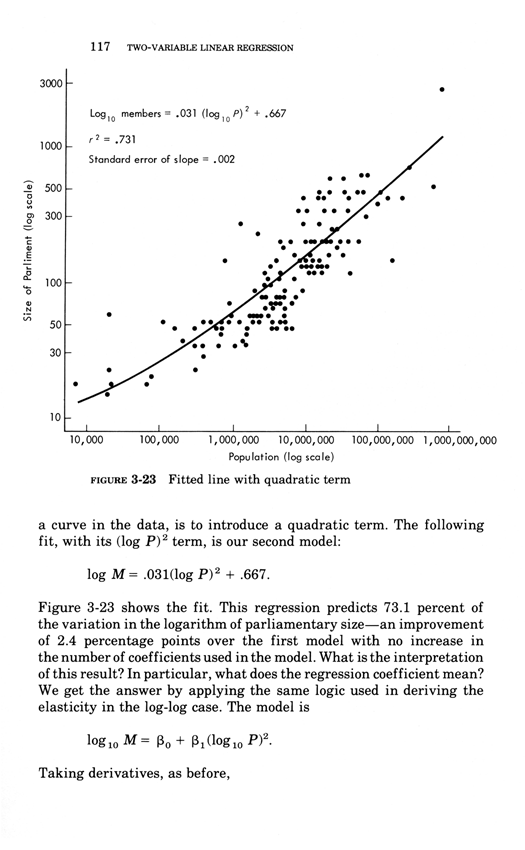
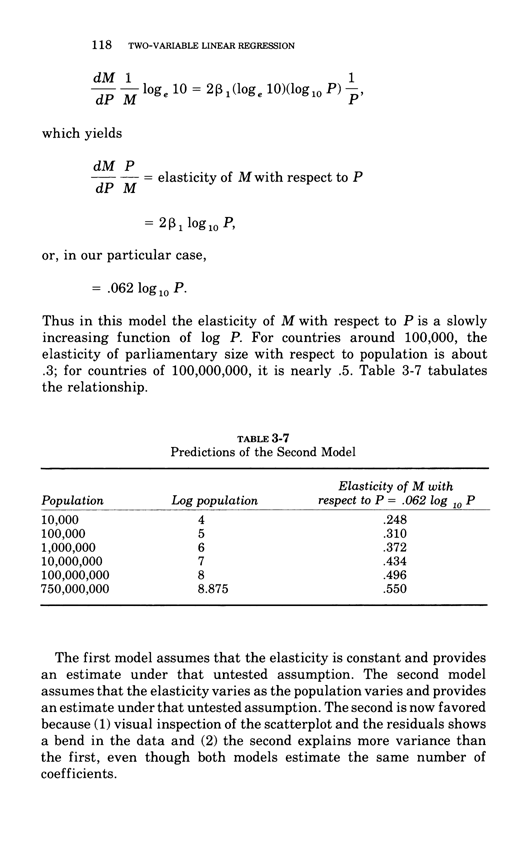
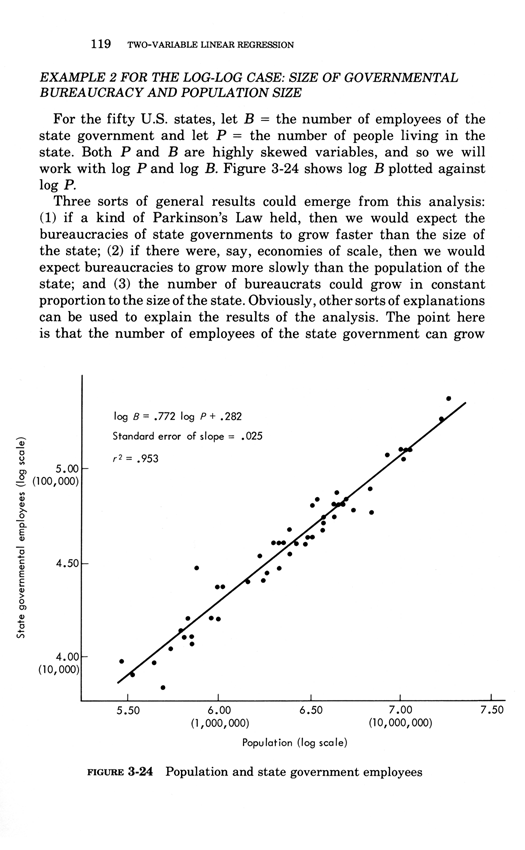
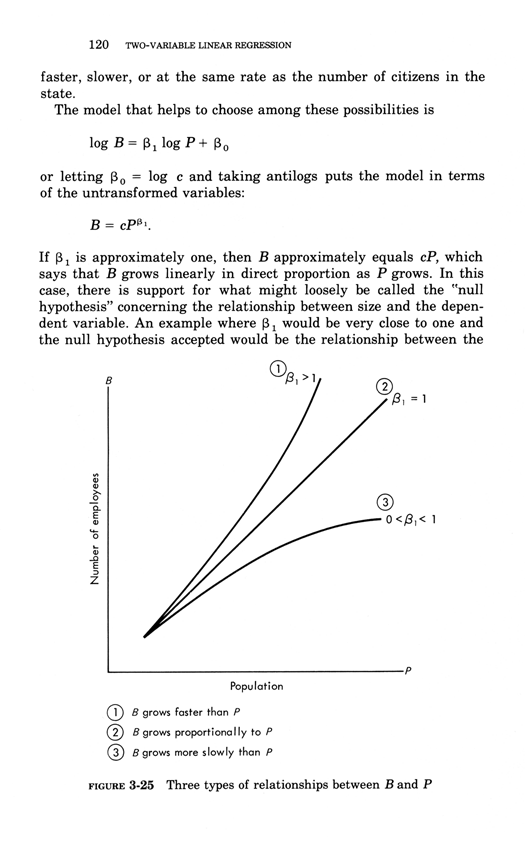
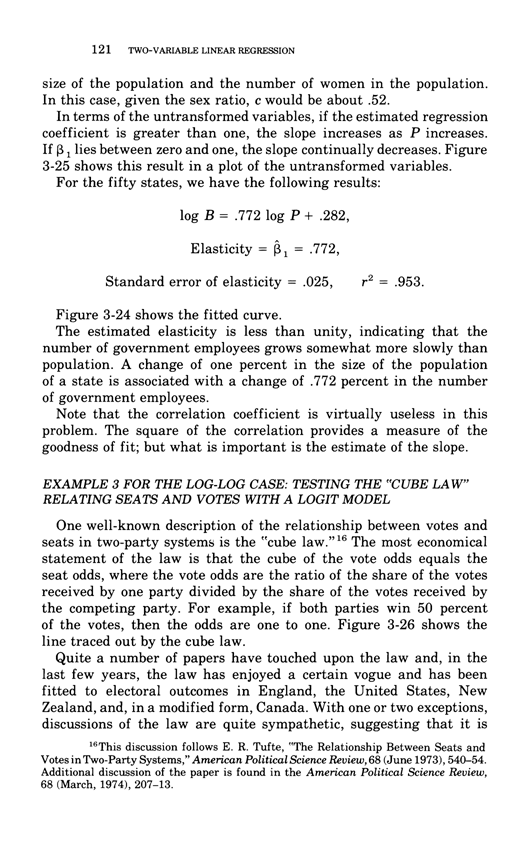
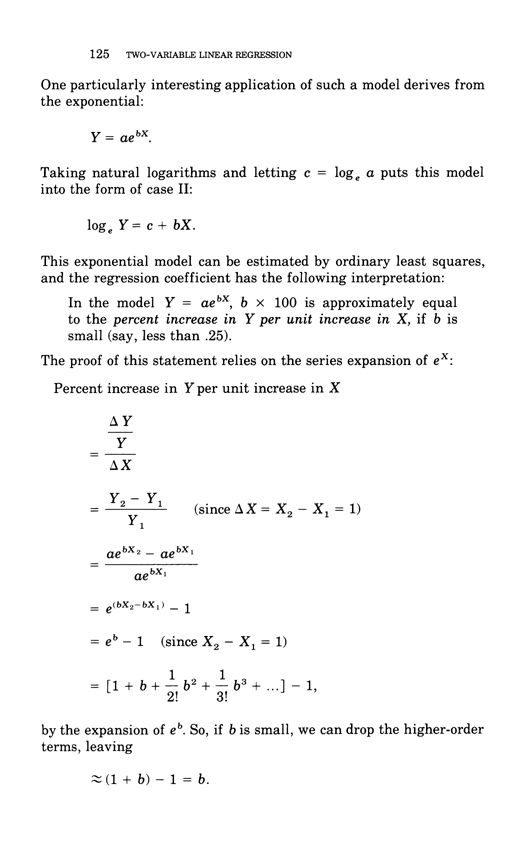
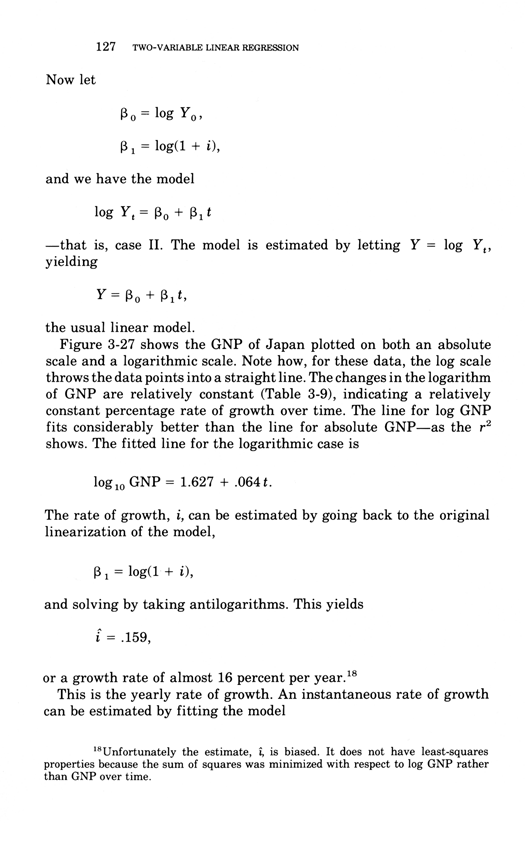
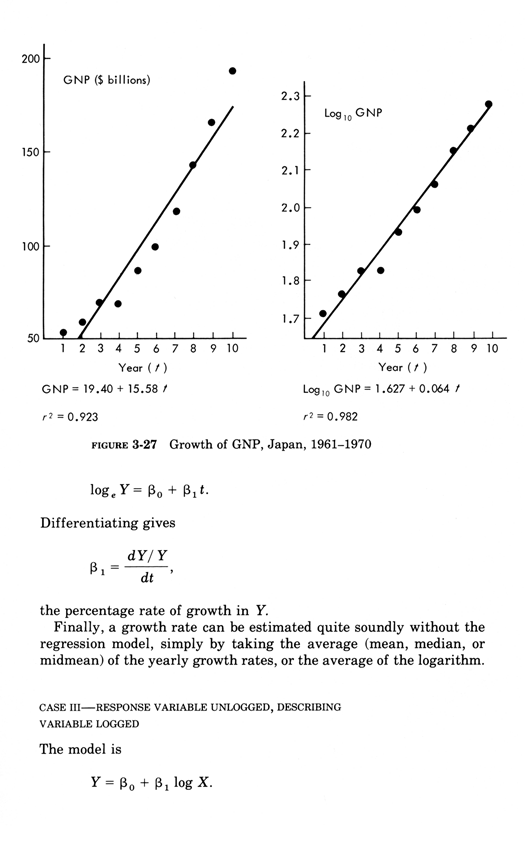
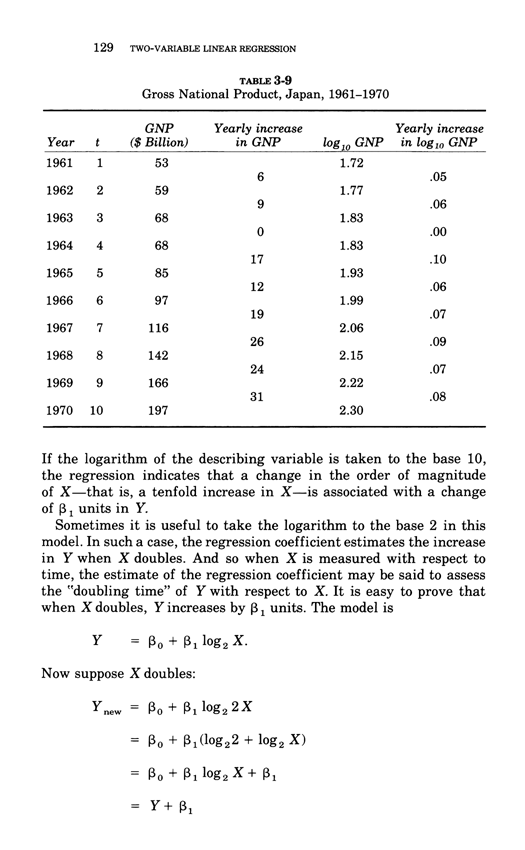
Fitting models to data
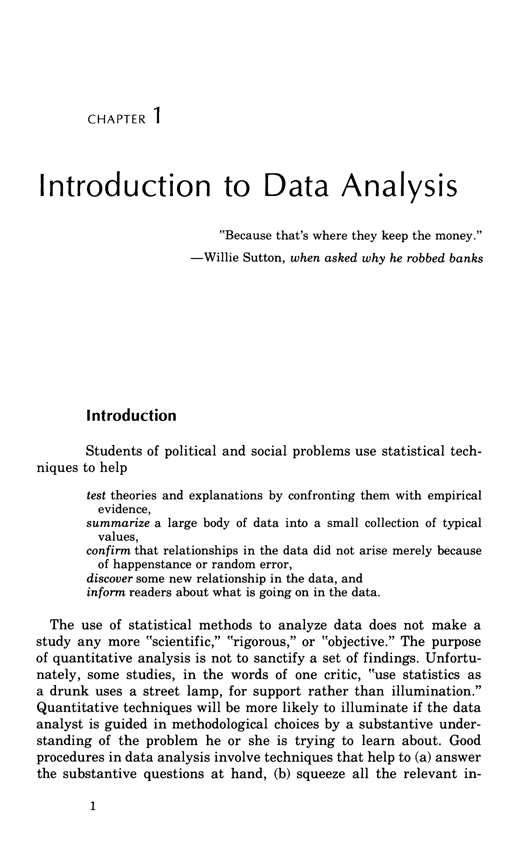
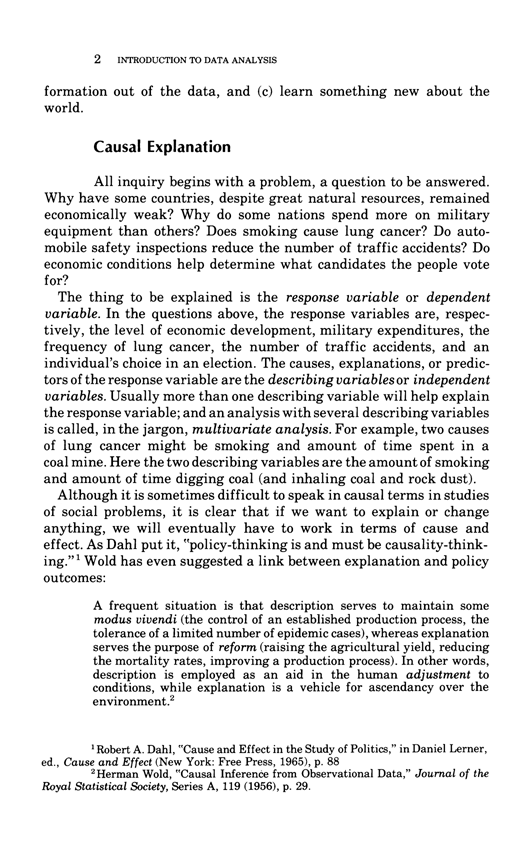
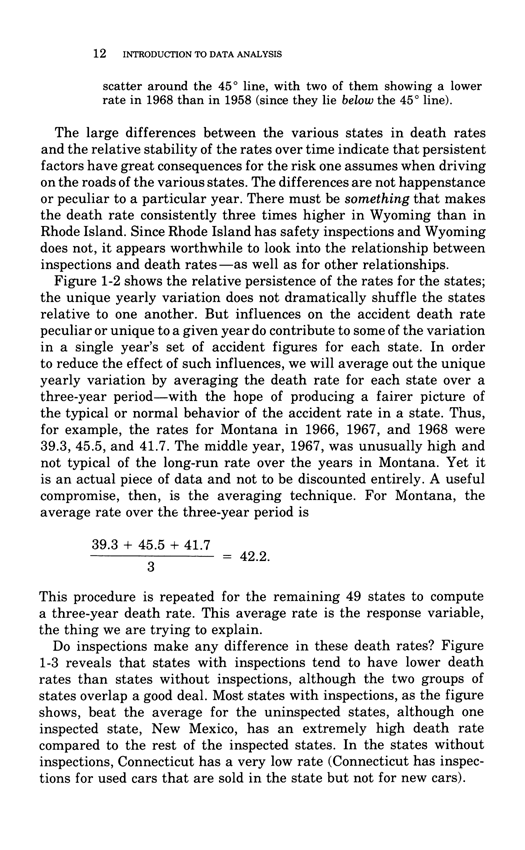
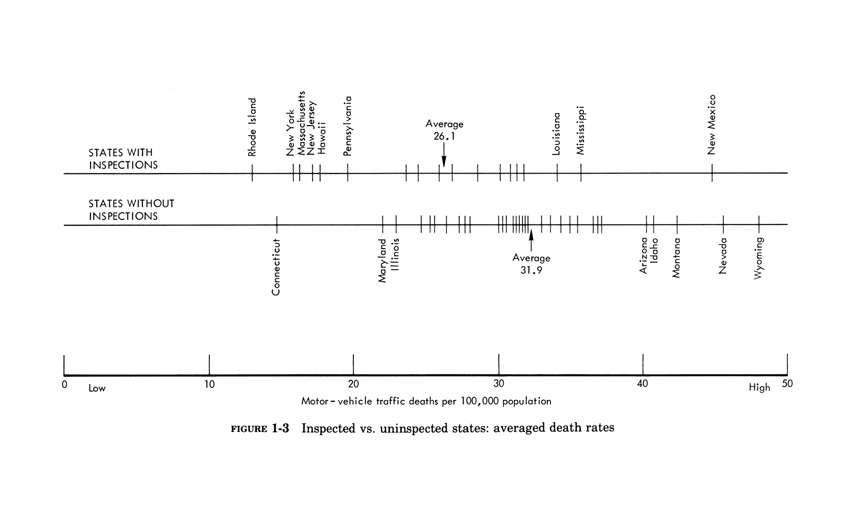
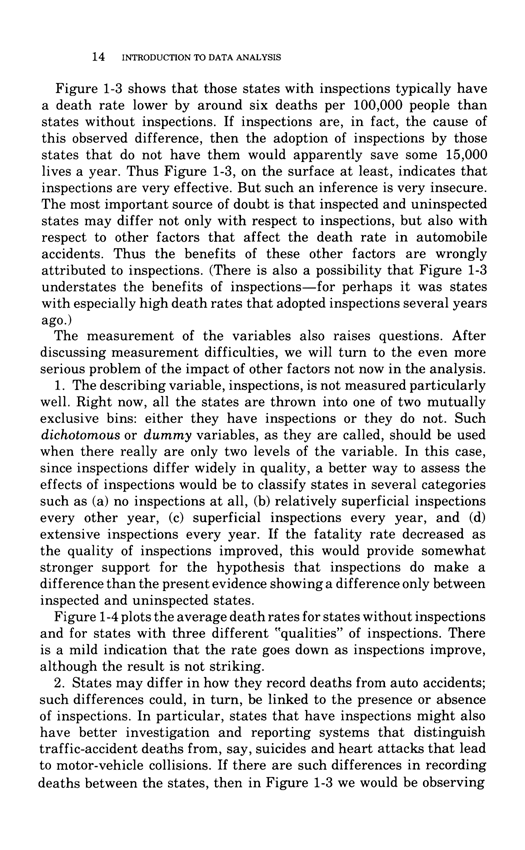
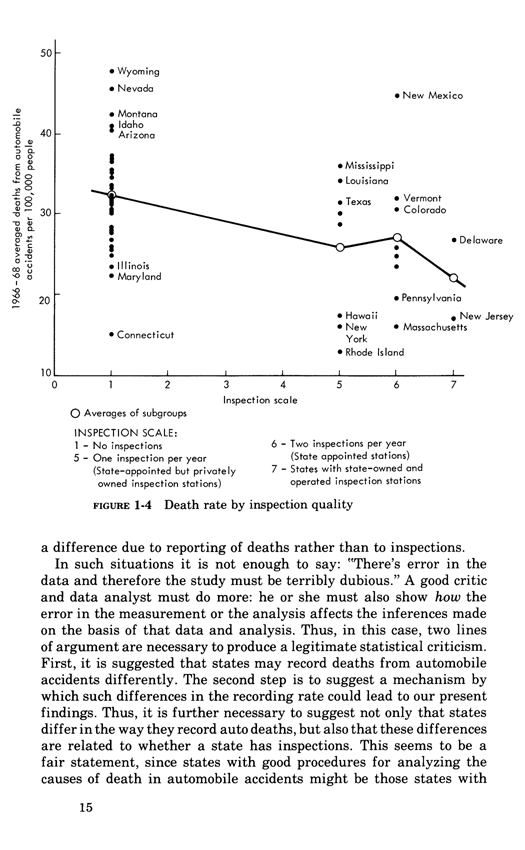
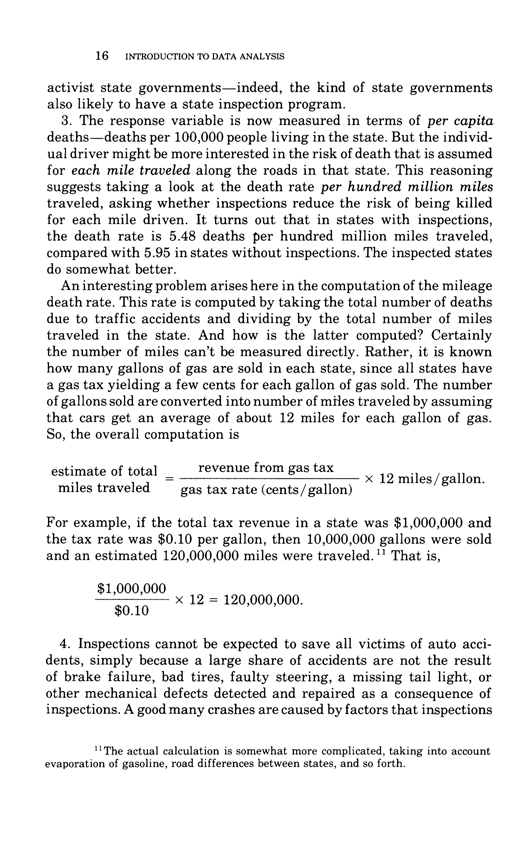
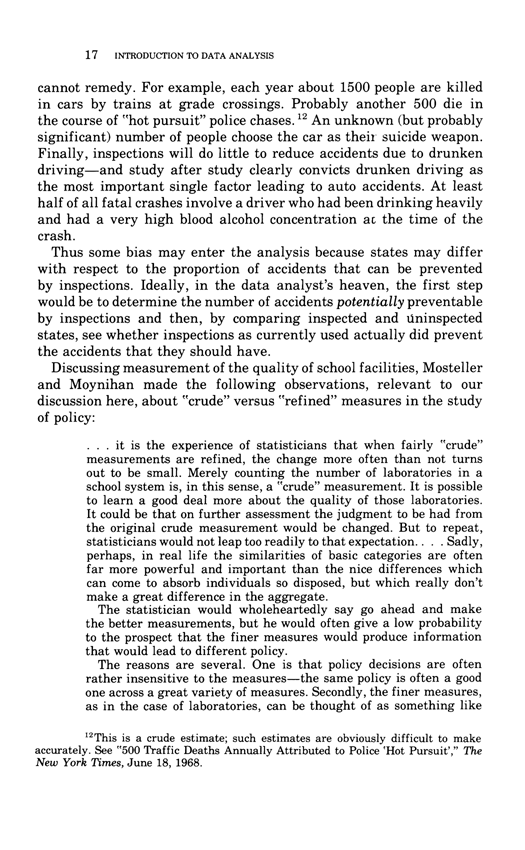
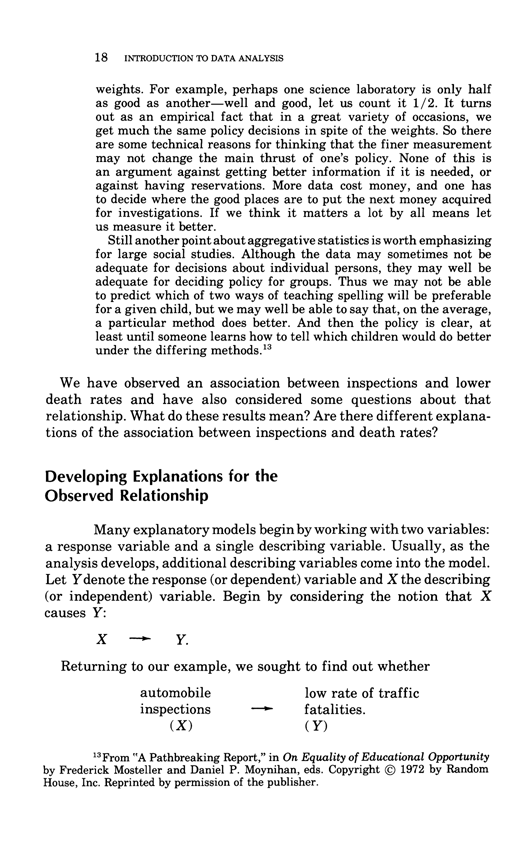
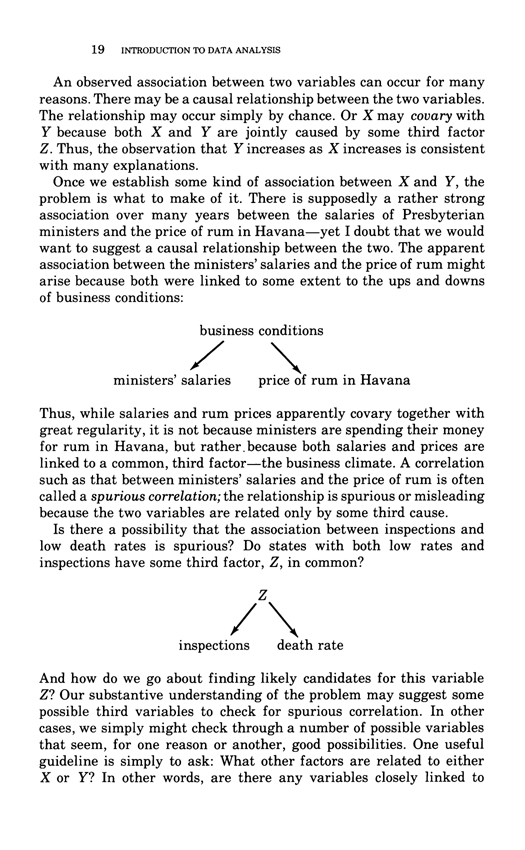
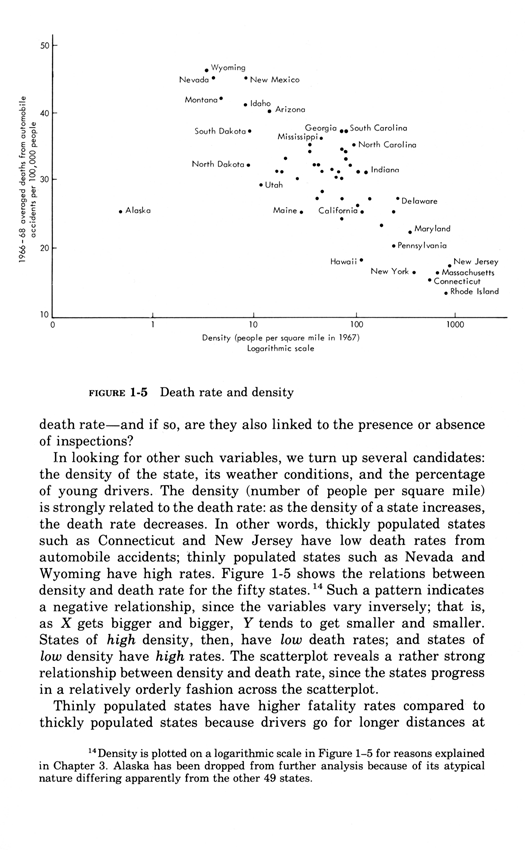
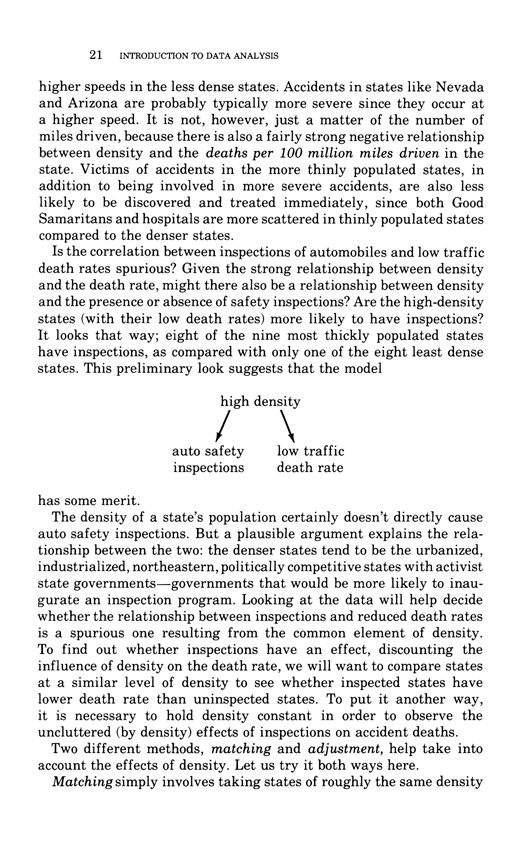
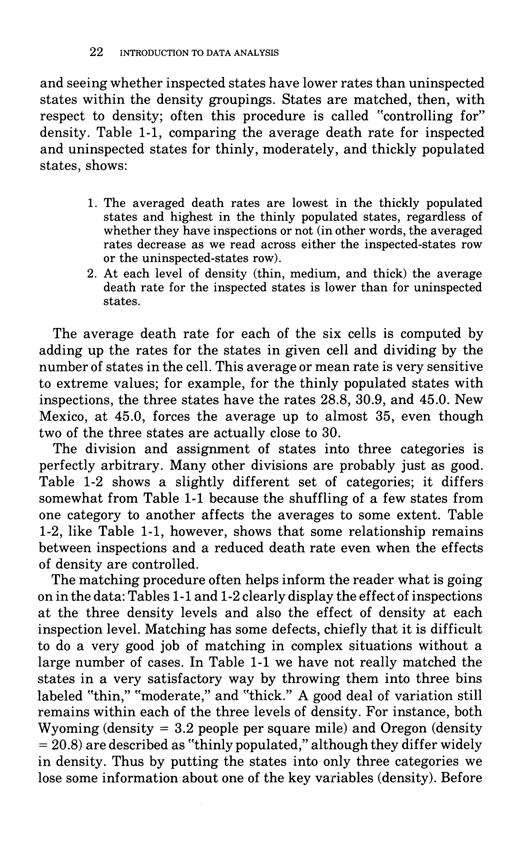
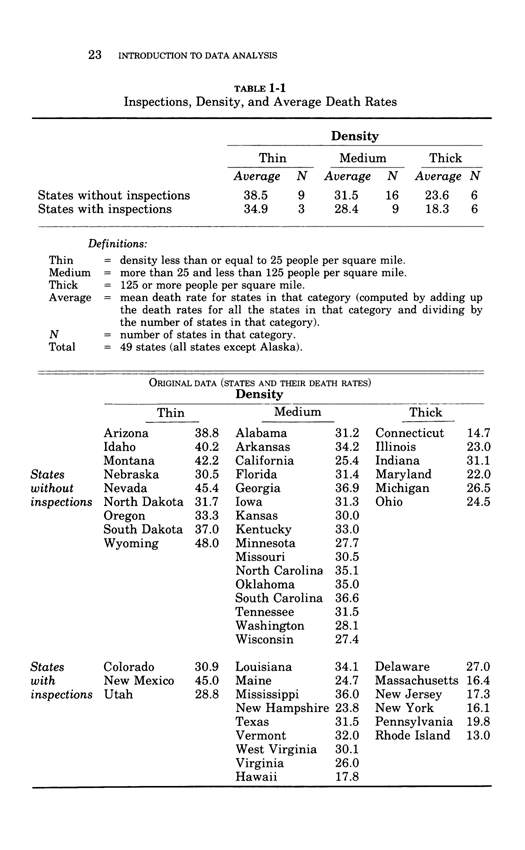
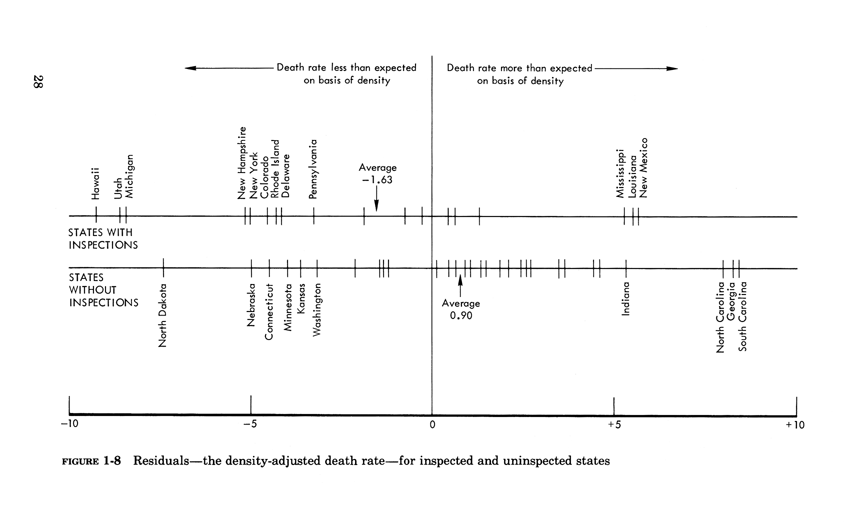
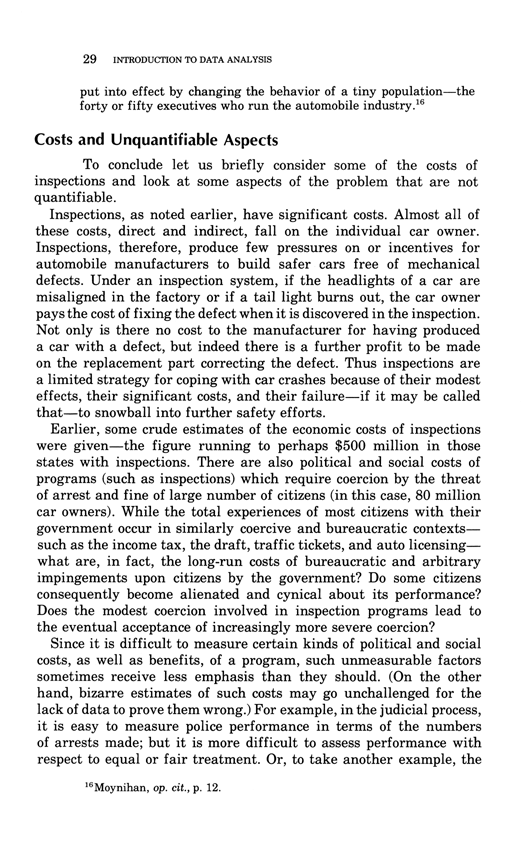
This essay below comes from Edward Tufte, Data Analysis for Politics and Policy, a classic textbook which had 17 printings in paperback.
This book is now available as an e-book, the price is $9. Order here.
You will receive the 179-page book immediately.
Thanks, ET
Below, the first chapter of Edward Tufte's Data Analysis for Politics and Policy.
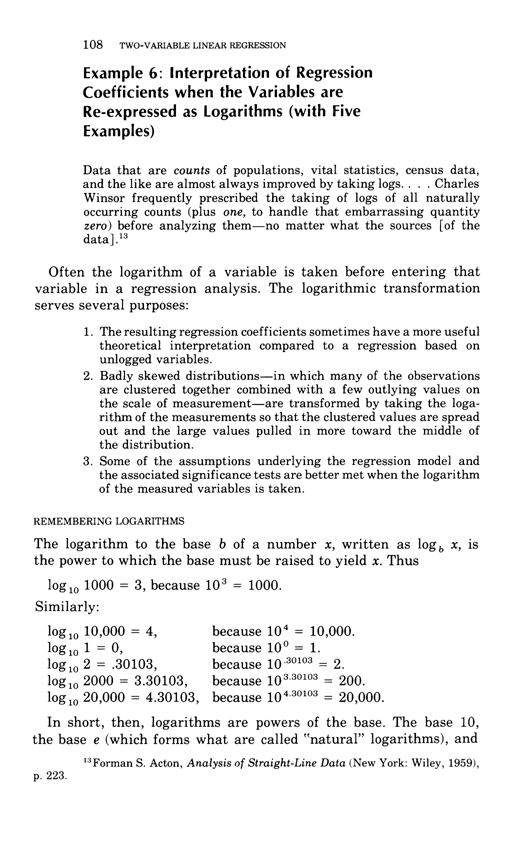
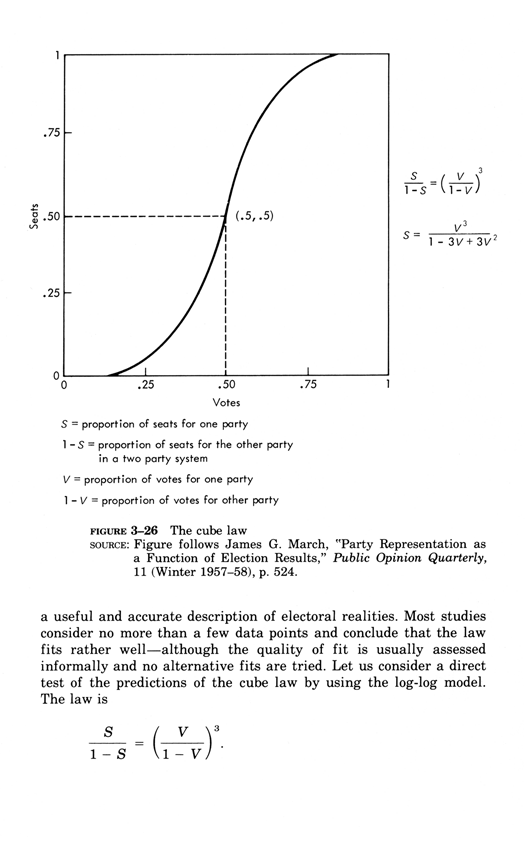
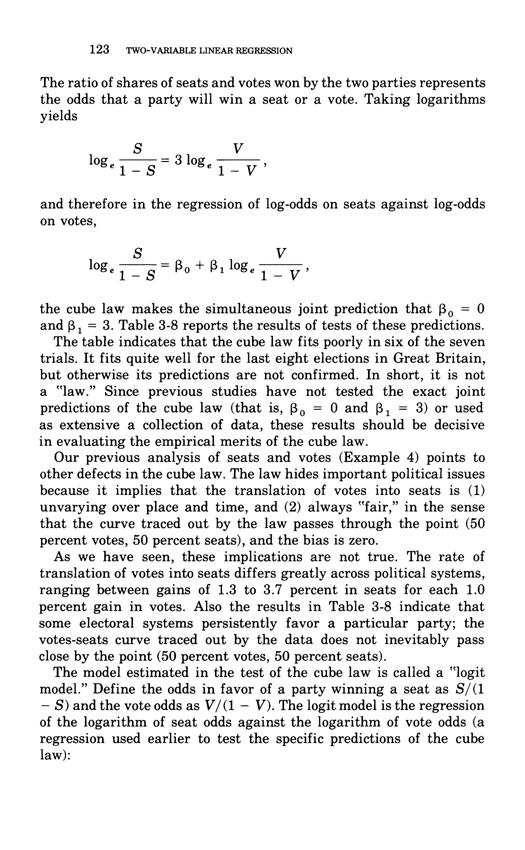
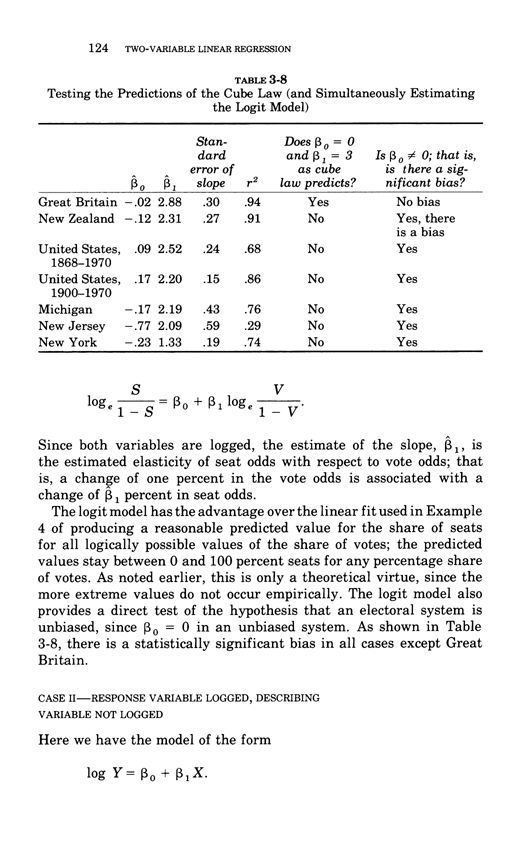
Taking logarithms in statistical data
Below are pages 108-134 from Edward Tufte's Data Analysis for Politics and Policy.
The complete book (179 pages) is available as an eBook for $9.
Open space creation
Jakob Nielsen's review of amazon's Fire
A thorough and thoughtful review at
http://www.useit.com/alertbox/kindle-fire-usability.html
I diverge from Jakob on one point: I'm not a fan of any mobile sites and happily read The New York Times on my iPhone 4.
Perhaps that's just me and my thin fingers. When confronted with a poorly designed mobile site, I abandon ship.
Many mobile sites also make it inconvenient to switch to their desktop version (see for example the mobile versions of espn.com, The Guardian, and Politico). Designers of mobile sites shouldn't surpress their competition. The user capability to move from the mobile to the desktop version should be at the top of the frontpage, and not buried at the bottom end of the frontpage along with the site map and the privacy warning.
Touchscreens have no hand
One reason I make sculpture is that I have stared long enough at the glowing flat rectangles of computer screens that show only flatland representations of real things. I like to make real things and love the physicality of making sculpture that resides in the physical world of three-space and time. The surfaces of my work often express tool marks and hand marks growing out of the handcraft of artwork production.These marks express the “hand” of the artwork and its makers. When I talk about my sculptures on artist tours I unconsciously run my hands over the surface of the work and, for smaller pieces, pick them up and hold them. These surfaces are complex, luscious, subtle, responsive, warm or cool, and three-dimensional to the touch. All that micro-physical information is made by the hand and is detected by hand and eye when the artwork is seen and touched.
There is no such hand in touchscreen computer devices. The touchscreen has no texture variation, has no physical surface information, is dead flat, reflects ambient light noise, and features oily fingerprint debris when seen at a raking angle. Also the elegant sharp edges that encase many touchscreens require users to desensitize their hands in order to ignore the physical discomfort produced by the aggressive edges. Last year in Cupertino, I yelled at some people about touchscreens that paid precise attention to finger touches from the user but not to how the device in turn touches the hands of the user (and produces divot edge-lines in the flesh).
Bret Victor has some intriguing thoughts about why touchscreens should be worthy of the human hand here.
Bret Victor's beautiful essay is, for me, a celebration of the hand rather than about interface possibilities.
There are big engineering issues in creating even book-like tactile experiences on or near screens, since flat images require glowing hard flatland display surfaces, a requirement contrary to tactile experiences. Perhaps there will be a few small steps toward tactility. Maybe tactility will become a feature in the endless feature cycle of devices. Dimensional compression is dimensional compression, however, and even those sentient beings that reside in string-theory N space probably whine that their N - 1 dimensional display device (necessary to fit in their N - 1 dimensional pockets) fails to capture the rich experience of their real N space.
So instead let us give more time for doing physical things in the real world and less time for staring at (and touching) the glowing flat rectangle.
Plant a plant, walk the dogs, read a real book, go to the opera. Or hammer glowing hot metal in a blacksmith shop:
This video is also available on YouTube and Vimeo
Ace and Porta do multimedia
At ET Modern in Cheslea:
Ace and Porta do multimedia 2010-2011
steel, aluminum, prints, 6 minute video, electronic kinetics
width 9.7 feet or 3 meters
Video at right shows Ace sculpture kinetics and sound.
And then Ace, the real dog, visits Chelsea and checks out the artwork involving himself and his sister Porta:
Shadows
Photograph taken at ET Modern in Chelsea, a mix of shadows cast by the back half of a dog sculpture and by the perforated stainless steel of a Bird piece. The light source was probably the reflection of the sun off the windshield of a car waiting at a traffic light on 11th Avenue. The shadow appeared for only about a minute on a corner wall of the gallery.
We use cookies to ensure that we give you the best experience on our website. If you continue to use this site we will assume that you are happy with it.


 Below, I started working with Dan Snow in January 2012. We first did these lacy walls, with the upper part only one stone wide. Some old walls in Ireland are wonderfully lacy with see-throughs and good airspaces.
Dry walling (without concrete or filler) usually requires that each stone touch 4 others, which is usually the case in these two lacy walls.
Below, I started working with Dan Snow in January 2012. We first did these lacy walls, with the upper part only one stone wide. Some old walls in Ireland are wonderfully lacy with see-throughs and good airspaces.
Dry walling (without concrete or filler) usually requires that each stone touch 4 others, which is usually the case in these two lacy walls.








 Photograph taken at ET Modern in Chelsea, a mix of shadows cast by the back half of a dog sculpture and by the perforated stainless steel of a Bird piece. The light source was probably the reflection of the sun off the windshield of a car waiting at a traffic light on 11th Avenue. The shadow appeared for only about a minute on a corner wall of the gallery.