Warning: Trying to access array offset on value of type bool in /nas/content/live/graphicspress/wp-content/themes/edwardtufte/archive.php on line 21
Microsoft's CEO wants ET method of presentation, not PowerPoint
From an interview of Steven A. Ballmer, chief executive of Microsoft, in The New York Times, May 16, 2009:
Q. What's it like to be in a meeting run by Steve Ballmer?
A. "I've changed that, really in the last couple years. The mode of Microsoft meetings used to be: You come with something we haven't seen in a slide deck or presentation. You deliver the presentation. You probably take what I will call "the long and winding road." You take the listener through your path of discovery and exploration, and you arrive at a conclusion."
"That's kind of the way I used to like to do it, and the way Bill [Gates] used to kind of like to do it. And it seemed like the best way to do it, because if you went to the conclusion first, you'd get: "What about this? Have you thought about this?" So people naturally tried to tell you all the things that supported the decision, and then tell you the decision."
"I decided that's not what I want to do anymore. I don't think it's productive. I don't think it's efficient. I get impatient. So most meetings nowadays, you send me the materials and I read them in advance. And I can come in and say: "I've got the following four questions. Please don't present the deck." That lets us go, whether they've organized it that way or not, to the recommendation. And if I have questions about the long and winding road and the data and the supporting evidence, I can ask them. But it gives us
greater focus."
Warning: Undefined variable $count in /nas/content/live/graphicspress/wp-content/themes/edwardtufte/archive.php on line 24
Magritte's Smile
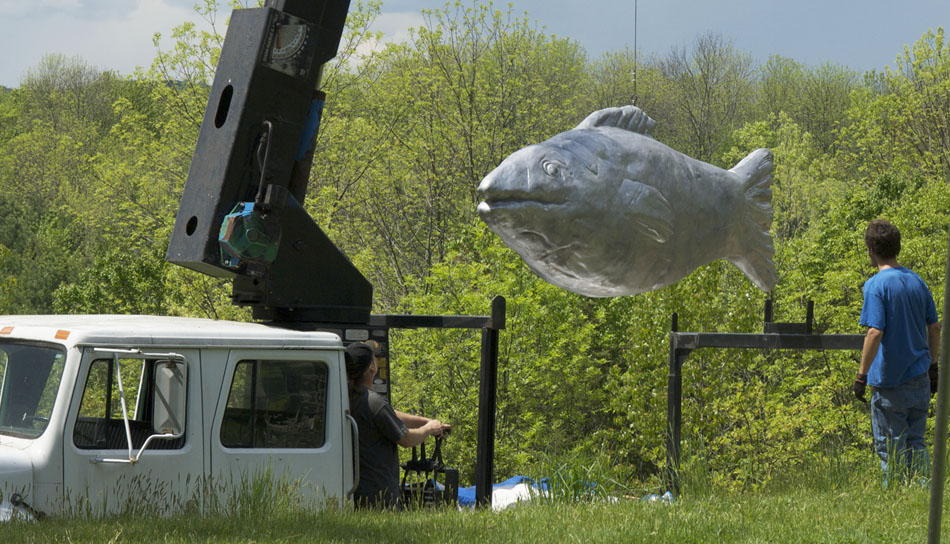
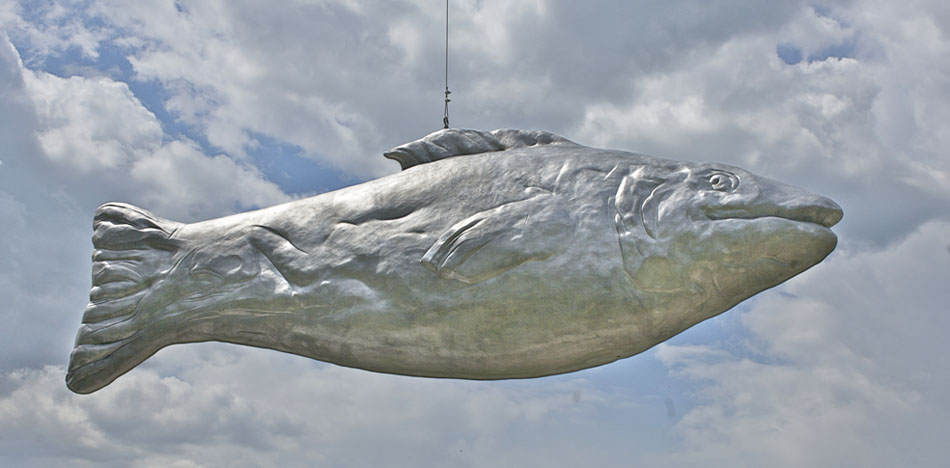
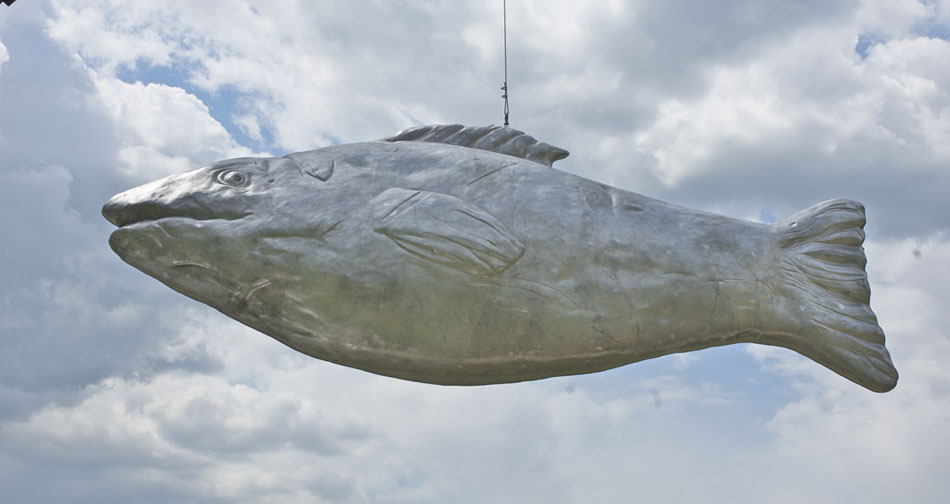
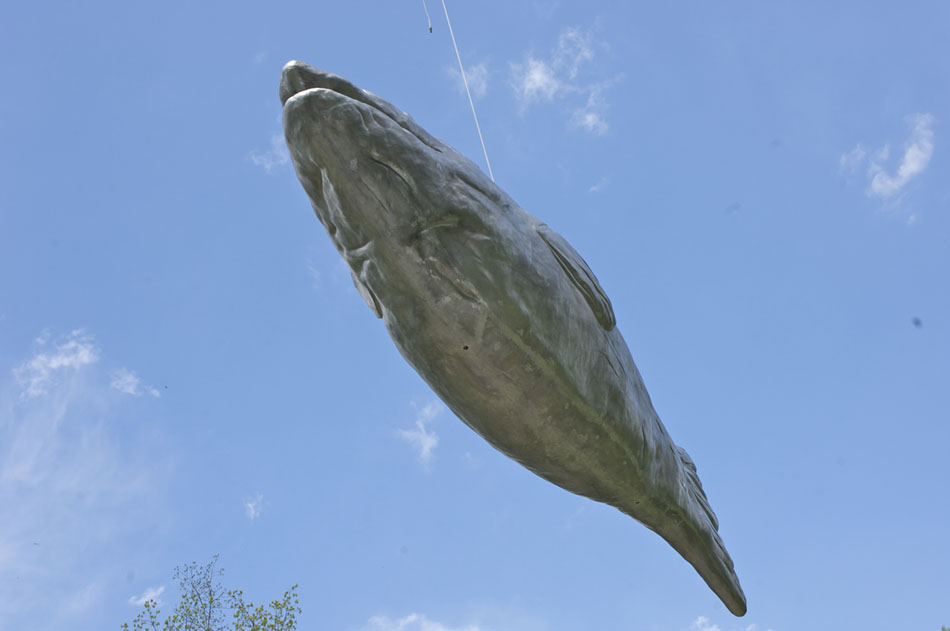
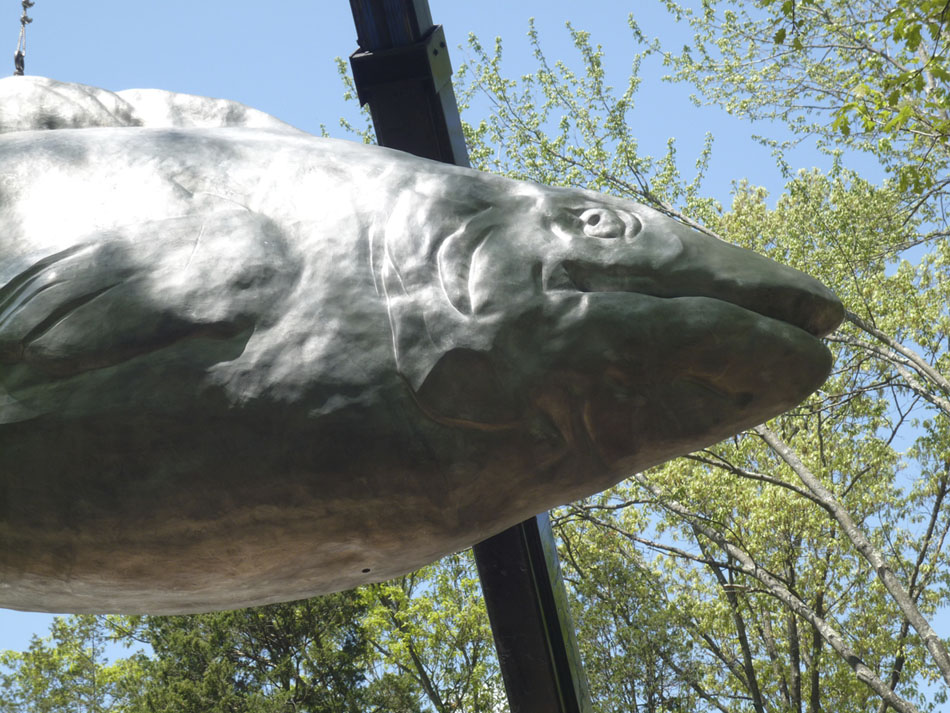
Here's a new piece, Magritte's Smile, 12 feet in length, aluminum casting, fabricated at Polich Tallix.
Work by Edward Tufte and Penny Humphrey.


Warning: Trying to access array offset on value of type bool in /nas/content/live/graphicspress/wp-content/themes/edwardtufte/archive.php on line 21
Telestrator--the electronic crayon
From Slate, a well-crafted video about the Telestrator, John Madden, and beyond:
http://www.slatev.com/player.html?id=1399217125
The Telestrator maps images, as described in the first chapter of Beautiful Evidence, with pieces of that chapter here:
https://www.edwardtufte.com/bboard/q-and-a-fetch-msg?msg_id=0001V7&topic_id=1
The Drawing Center fax show: ET exhibits
Scroll down for ET exhibits at the fax show.
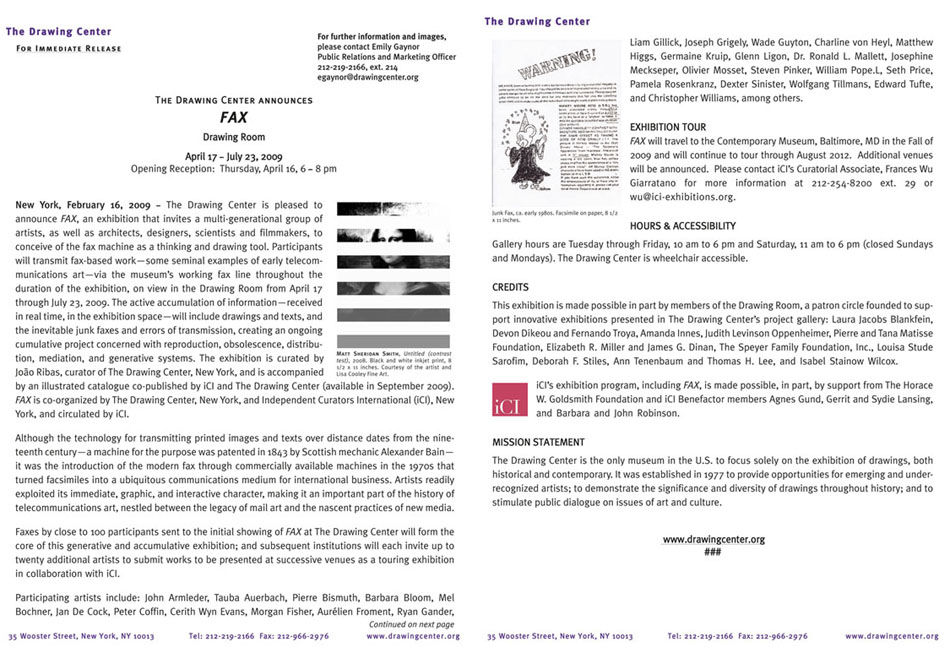 The initial invite provoked memories of curly, chemically, odd-color faxes. But a few weeks later came this from João Ribas, curator:
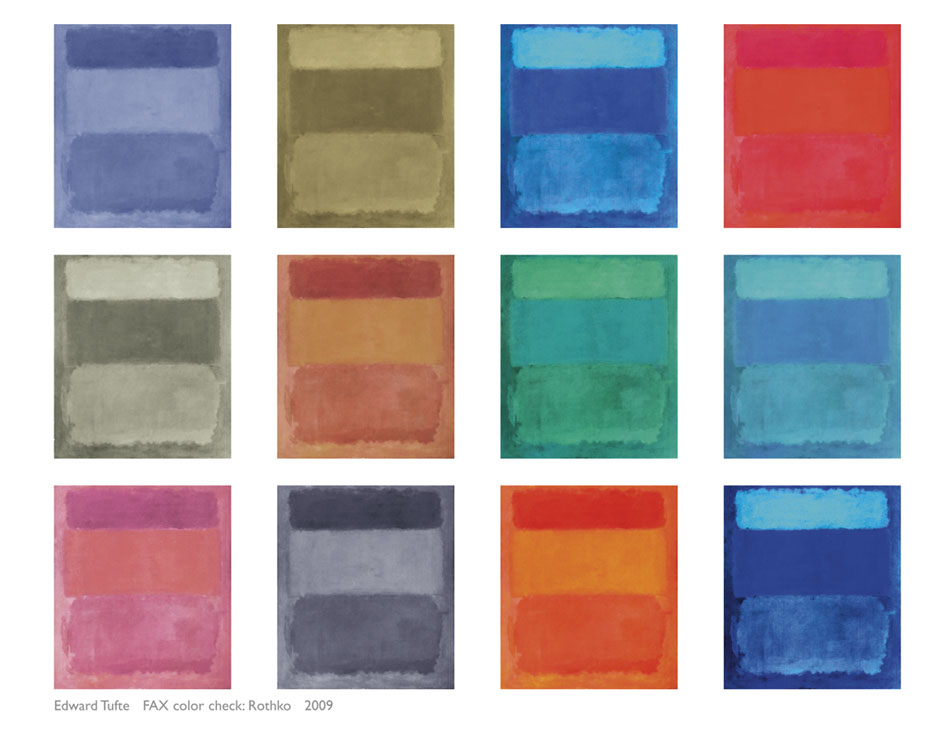
 During the last year, for the show at the Aldrich Contemporary Art Museum, I've been experimenting with a Rothko-like structure moving through varous palettes. It appears that some of Rothko-beauty derives from structural format (color fields with subtle and ragged margins, and from saturation and value, rather than hue--because the beautiful Rothko character persists over all kinds of hue changes. My test Rothkos are printed out very large, but the FAX can only show very small versions, here collected together:
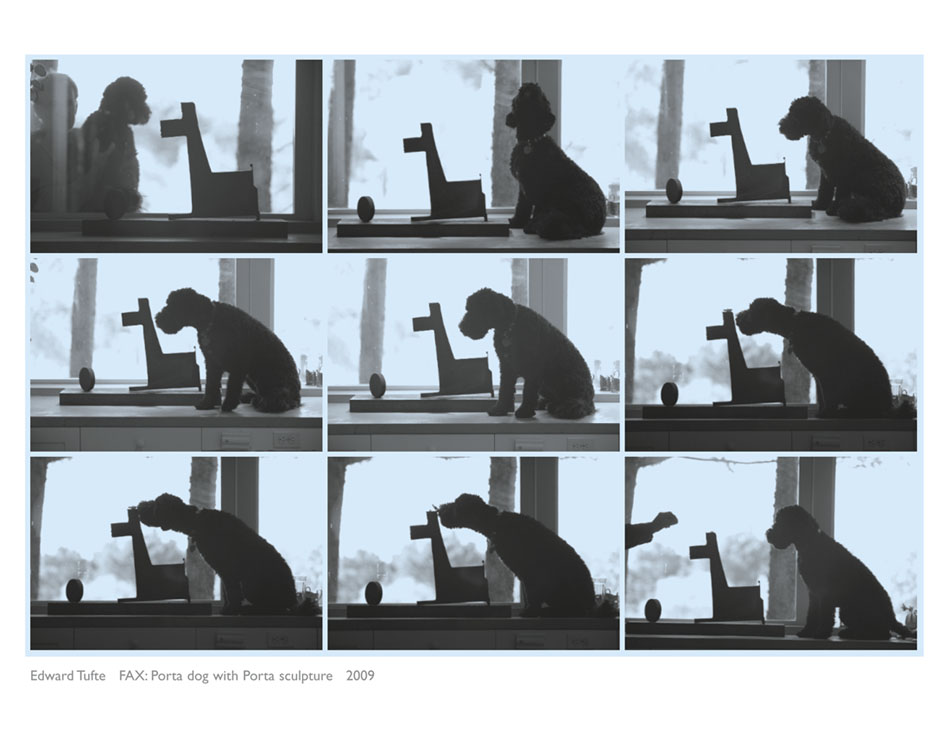
 Here below is Porta the (real) Dog interacting with Porta the (sculpture) Dog, from our threads Dog sculpture and Porta and the Birds (at 300 fames/second. Porta, as her name hints, is a Portuguese Water Dog and arrived here about a year ago and happens to look like the Obama's dog. Four months ago we welcomed Porta's brother (same parents, not littermates) Ace, who has not yet appeared on this board. Porta is exceptional, as those who saw Porta apparently run full tilt backwards in her debut movie. There are now a bunch of Porta sculpture pieces for the Aldrich show, including a 12 foot high Porta.
But what does this have to do with the FAX show?
If artists can't put their own dogs and dog sculptures in their own shows, what has the world come to?
Here below is Porta the (real) Dog interacting with Porta the (sculpture) Dog, from our threads Dog sculpture and Porta and the Birds (at 300 fames/second. Porta, as her name hints, is a Portuguese Water Dog and arrived here about a year ago and happens to look like the Obama's dog. Four months ago we welcomed Porta's brother (same parents, not littermates) Ace, who has not yet appeared on this board. Porta is exceptional, as those who saw Porta apparently run full tilt backwards in her debut movie. There are now a bunch of Porta sculpture pieces for the Aldrich show, including a 12 foot high Porta.
But what does this have to do with the FAX show?
If artists can't put their own dogs and dog sculptures in their own shows, what has the world come to?
 Finally, a comparative resolution test: one FAX vs. 2,000 PowerPoint slides, a play on Ad Reinhardt's remark "If a picture isn't worth a thousand words, the hell with it." The image shows sparklines from Beautiful Evidence.
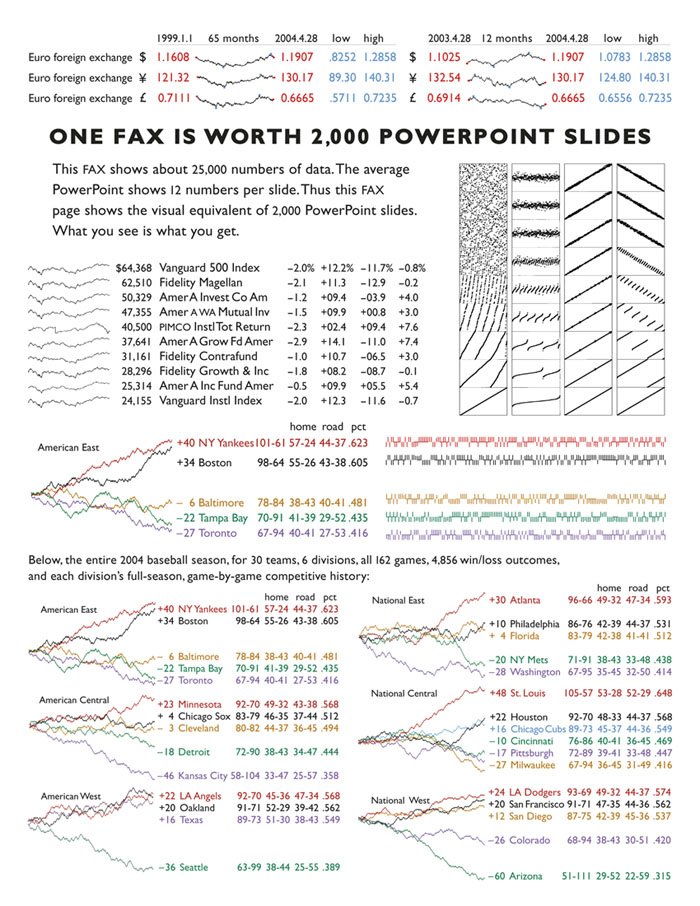 Shown above are our 5 originals. Below, the resulting FAX to FAX transmission as received and printed by The Drawing Center FAX machine.
The initial invite provoked memories of curly, chemically, odd-color faxes. But a few weeks later came this from João Ribas, curator:
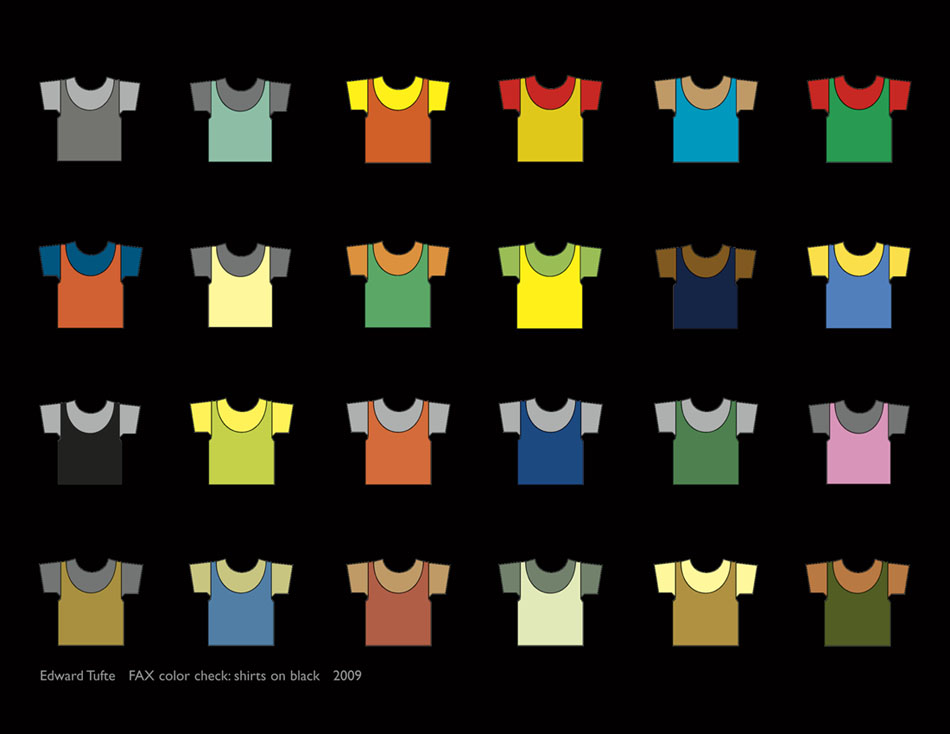
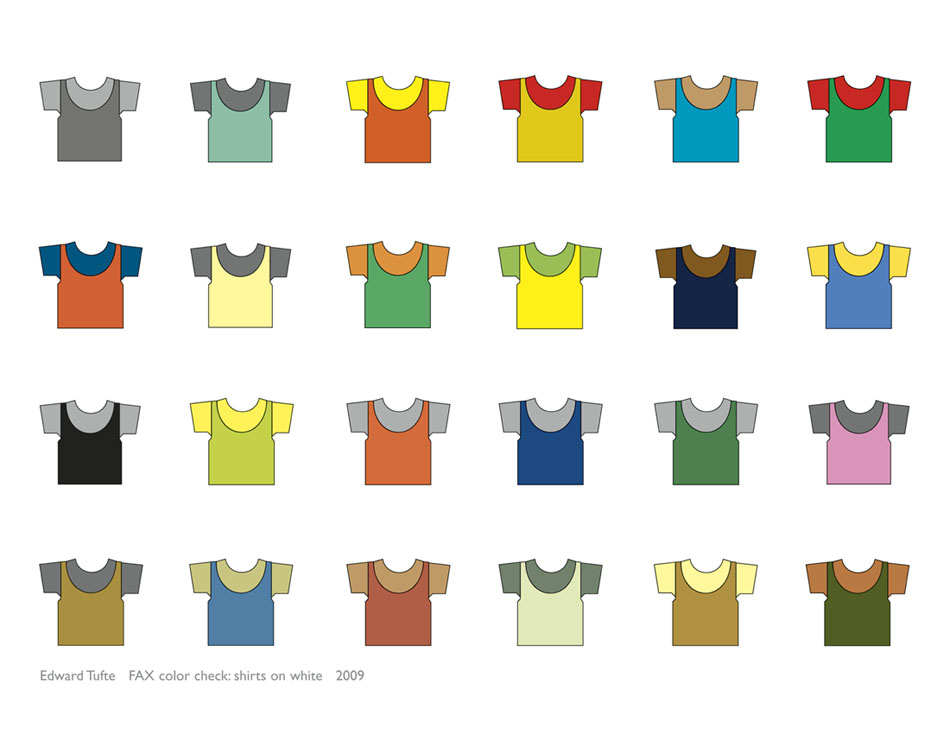
"The fax machine model is Canon Pixma MX850. It has a resolution of up to 9600 x 2400 color dpi and 600 x 600 black-and-white dpi. We can receive color if you send your fax from a machine with color capabilities. Our machine uses standard 8.5 x 11 inch letter paper."Wow. But it must be pricey, I thought. Only $240 it turns out. Such high-resolution color prompted some color FAX tests. The first two images (our originals) show an image from Envisioning Information, later redone for the Cognitive Art series of fine art prints. The black and white grounds (shirts are identical in both faxes) reveal color effects of brightening, color mixing, and so on:
During the last year, for the show at the Aldrich Contemporary Art Museum, I've been experimenting with a Rothko-like structure moving through varous palettes. It appears that some of Rothko-beauty derives from structural format (color fields with subtle and ragged margins, and from saturation and value, rather than hue--because the beautiful Rothko character persists over all kinds of hue changes. My test Rothkos are printed out very large, but the FAX can only show very small versions, here collected together:
Here below is Porta the (real) Dog interacting with Porta the (sculpture) Dog, from our threads Dog sculpture and Porta and the Birds (at 300 fames/second. Porta, as her name hints, is a Portuguese Water Dog and arrived here about a year ago and happens to look like the Obama's dog. Four months ago we welcomed Porta's brother (same parents, not littermates) Ace, who has not yet appeared on this board. Porta is exceptional, as those who saw Porta apparently run full tilt backwards in her debut movie. There are now a bunch of Porta sculpture pieces for the Aldrich show, including a 12 foot high Porta.
But what does this have to do with the FAX show?
If artists can't put their own dogs and dog sculptures in their own shows, what has the world come to?
Finally, a comparative resolution test: one FAX vs. 2,000 PowerPoint slides, a play on Ad Reinhardt's remark "If a picture isn't worth a thousand words, the hell with it." The image shows sparklines from Beautiful Evidence.
Shown above are our 5 originals. Below, the resulting FAX to FAX transmission as received and printed by The Drawing Center FAX machine.Describing and tracking stimulus projects totaling $787,000,000,000 on the internet: any ideas?
From Recovery.gov, a federal government website tracking the stimulus projects:
"RECOVERY ACCOUNTABILITY AND TRANSPARENCY BOARD
The Recovery Accountability and Transparency Board was created by the American Recovery and Reinvestment Act to coordinate and conduct oversight of funds distributed under this law in order to prevent fraud, waste and abuse. The Board includes a Chairman, Earl E. Devaney, appointed by the President, and ten Inspectors General specified by the Act. The Board has a series of functions and powers to assist it in the mission of providing oversight and promoting transparency regarding expenditure of funds at all levels of government. Quarterly and annual reports on the use of Recovery Act funds and any oversight matters will be issued as part of the Board's work. The Board may also make recommendations to agencies on measures to avoid problems and prevent fraud, waste and abuse. To address issues quickly, the Board may send flash reports to the President and Congress on potential management and funding problems that require immediate attention. The Board is also charged under the Act with establishing and maintaining a user friendly website, Recovery.gov, to foster greater accountability and transparency in the use of covered funds.
The job of the Recovery Accountability and Transparency Board is to make sure that Recovery.gov fulfills its mandate -- to help citizens track the spending of funds allocated by the American Recovery and Reinvestment Act.
The Board consists of Inspectors General from about ten major cabinet agencies -- including the Departments of Justice, Treasury, and Commerce."
This is an extraordinary and noble effort at improving the accountability and transparency of government funding.
I met with the Chair of the Recovery Accountability and Transparency Board and the director of Recovery.com a few days ago in Washington, DC to discuss their work. These discussions may continue and I would appreciate any ideas about this project and its website. (I'm already aware of the pie charts on their frontpage!)
With regard to my own accountability and transparency, I expect to provide some advice to the Recovery Accountability and Transparency Board. My on-going policy for worthy government work (e.g., Recovery Accountability and Transparency Board, the Centers for Disease Control and Prevention, NASA, etc.) is that the work is pro bono. Any changes to this policy will be posted in this thread.
Thanks, ET
Digital books (and how to put ET books on the iPad)
Here's a look a some iPhone apps for reading books.
I like the Classics app very much and read the Wonderful Wizard of Oz and Hound of the Baskervilles withease. Classics has a page-flip metaphor which works well. This app, however, has only 20 books available at this time.
Sherlock, another iPhone app, uses a continously scrolling text arrangement, which produces too much moving type andnot enough reading on the small iPhone screen--and the faster one reads, the more the type scrolls. With more more patience and practice, I might well have lasted longer than 800 words of Sherlock Holmes.
iManual (sliding pages) worked OK for David Pogue's excellentiPhone:The Missing Manual, although computer manuals can be consumed only in small doses unlike a romp through the Hound of the Baskervilles. Pogue's manual helpfully unveiled the clever iPhone keyboard. The book is the best-selling computer manual these days and is available only on the iPhone.
I expect to try out a variety of other digital readers, beginning with Kindle, over the months. A thoughtful discussion of Kindle by the always interesting Karrie Jacobs in Metropolis is here.
For some reason, I've always struggled to read through scholarly articles published as PDF files on a desktop computer screen. After a few pages I give up and print the article out. Google Books is useful for look-up, not sustained reading.
There are all sorts of interesting book design, interface, and copyright issues involving digital readers. I've been thinking about a digital reader version of my own books, although it would involve substantial compromises since my books are designed to the double-page spread and also they push even paper's resolution (which is 10 times greater than most screen resolutions). On the other hand, backlighted screen images often look much better than on paper and those images can incorporate zooming.
Abstract alley art
Blue Arrow, paint on plywood 2014 photo in SoMa alley, original destroyed as all alley art is
2016 image heavily color adjustedwhich is legal in alley art
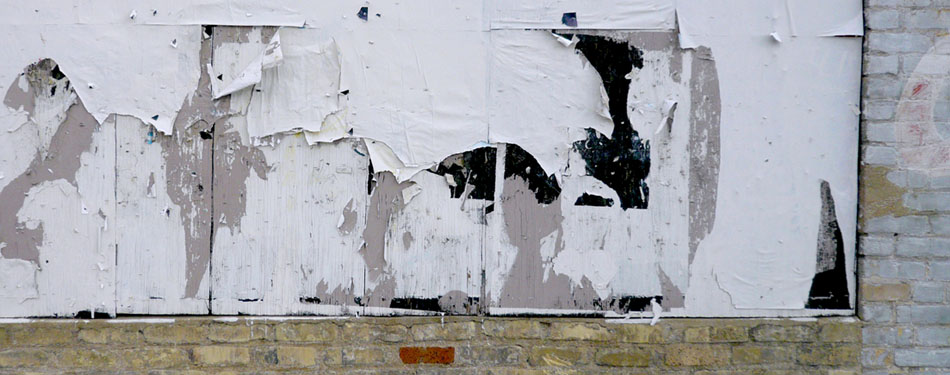
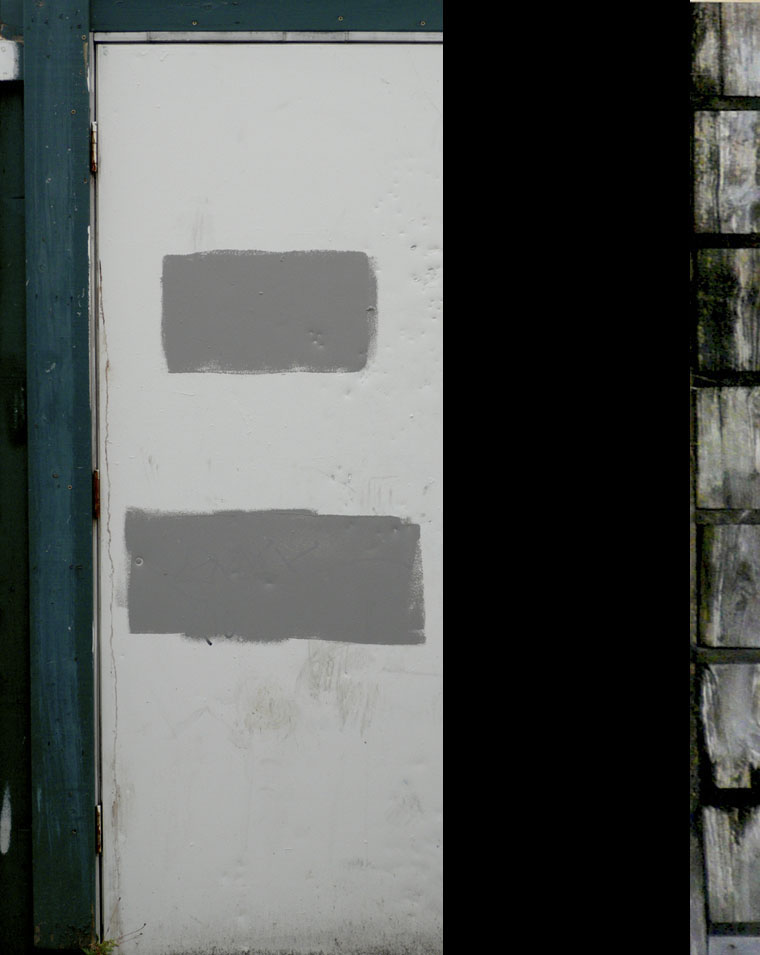
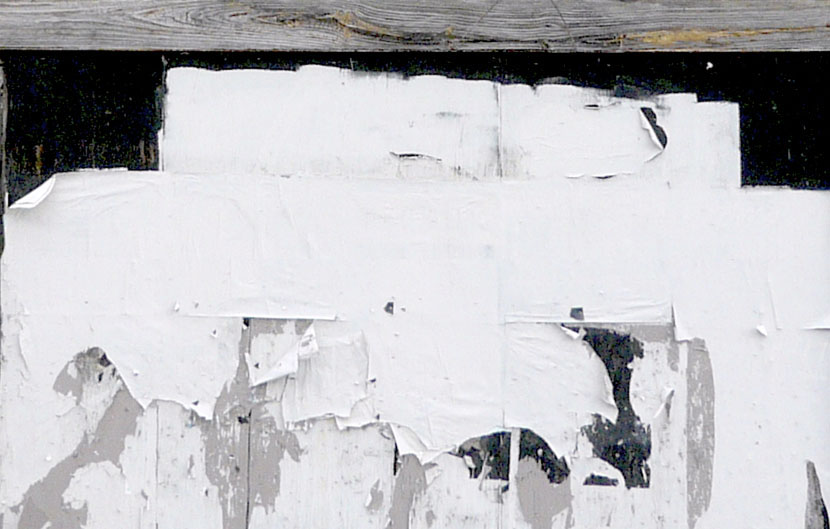
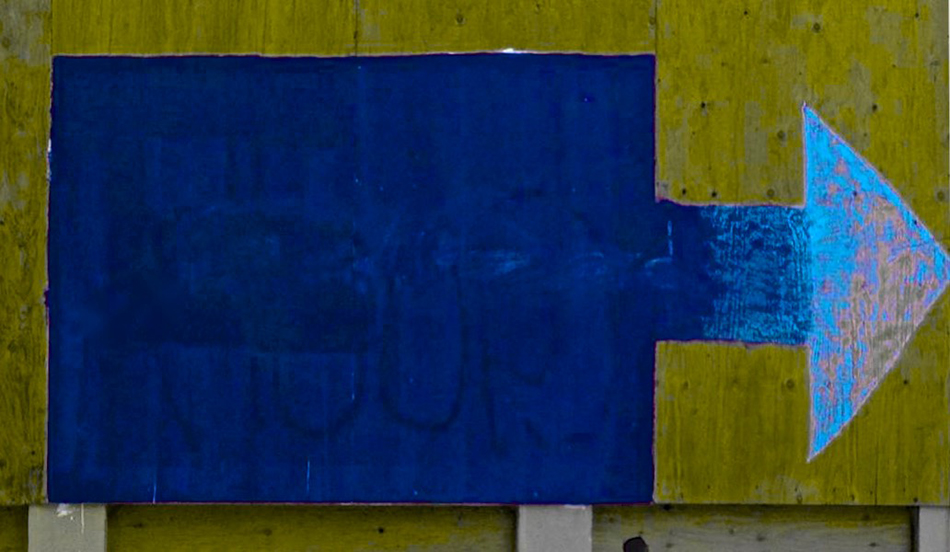 Fresh abstract painting/collage/assemblage can be found in city alleys.
A video is presented below.
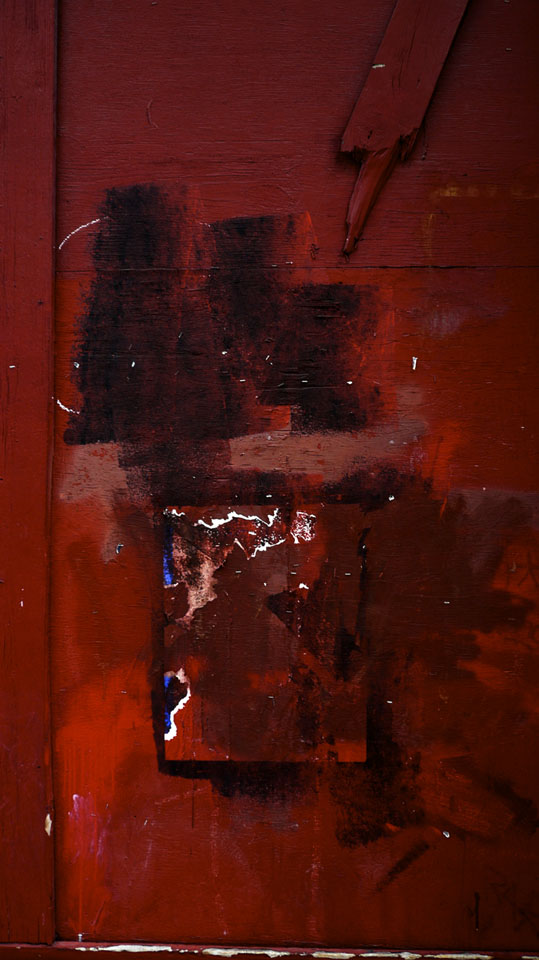
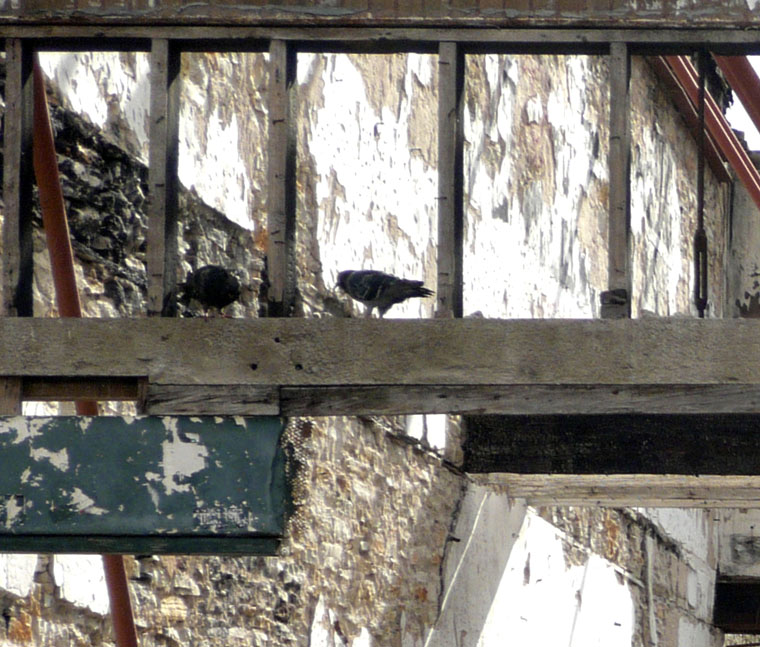
Here are my findings over the last two years in the alleys and backstreets of Austin, Texas:
Fresh abstract painting/collage/assemblage can be found in city alleys.
A video is presented below.
Here are my findings over the last two years in the alleys and backstreets of Austin, Texas:
Fresh abstract painting/collage/assemblage can be found in city alleys.
A video is presented below.
Here are my findings over the last two years in the alleys and backstreets of Austin, Texas:



 |
Excel's statistical graphics
From a Professor of Physics:
http://scienceblogs.com/principles/2009/03/why_does_excel_suck_so_much.php#more
Designing a museum sculpture garden: land, trees, artworks
I'm in the midst of constructing a sculpture garden and installing pieces at the Aldrich Contemporary Art Museum in Ridgefield, CT.
Work began in December 2008 when pines, cedars, hemlocks, and bamboo were transplanted from our Hogpen Hill Farms in Woodbury, CT to the Aldrich Museum garden. We've recontoured the land, moved some existing trees, and are now installing pieces.
Here is the newly installed Escaping Flatland on the afternoon after the big snowstorm in late February 2009. This complex artwork arrays 6 pieces consisting of 24 stainless steel plates (14,152kg, 31,200 lbs). Larkin's Twig is nearby.
 Below, this short HD video shows the process of museum installation of Escaping Flatland, constructed from 14,200 kg or 31,200 lbs of stainless steel arranged in 6 elements each with 4 plates of stainless. Compared to other installations, this was eerily quiet since Clovis, our crane expert, used his battery-operated crane (with a really big battery!) to move the plates around. Gone were the usual diesel smoke and engine roar.
Below, this short HD video shows the process of museum installation of Escaping Flatland, constructed from 14,200 kg or 31,200 lbs of stainless steel arranged in 6 elements each with 4 plates of stainless. Compared to other installations, this was eerily quiet since Clovis, our crane expert, used his battery-operated crane (with a really big battery!) to move the plates around. Gone were the usual diesel smoke and engine roar.
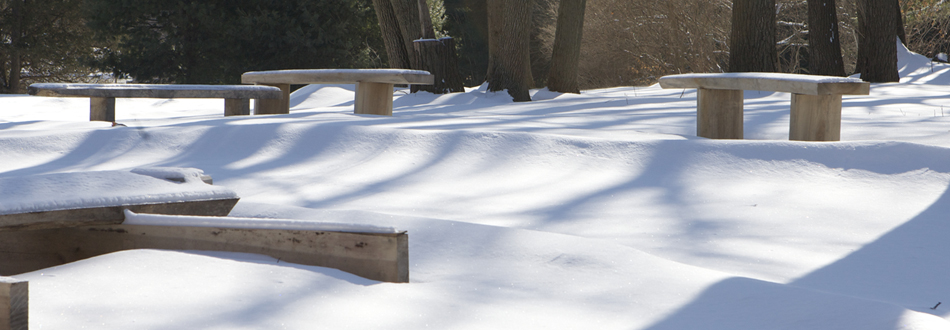
Outdoor benches
I designed some informal benches for my sculpture show at the Aldrich Contemporary Art Museum. Peter Taylor and ET made these from cut down ash, oak, and poplar trees from our land, which were cut into thick boards at a nearby sawmill and then dried and weathered over the years. Shown are some test designs for simple elegant outdoor benches. Note the "live edges," the rounded edges of the tree trunk stripped of bark.